Repair or Replace? Deciding on a Grand Rapids Roof
Whether a Grand Rapids roof needs a repair or a full replacement usually comes down to three questions: how much of the roof is actually damaged, whether the roof predates Michigan’s eave ice-barrier code, and whether the same leak keeps returning to the same spot every winter. Grand Rapids Roofing Pros is an independent dispatch service connecting West Michigan homeowners with licensed local roofers for either path.
Call now for a licensed local roofer
Call now and we’ll connect you by phone with the licensed local roofer you’re matched with — no phone tag, no obligation.
Ready to talk to someone about your roof?
Call to reach the licensed local roofer you’re matched with in Grand Rapids & West Michigan.
Call (901) 704-8932When you call, stay on the line for a few seconds while we match you with the licensed local roofer for your area. Have your address and a quick description of the problem ready.
We connect homeowners with independent licensed roofing professionals in the Grand Rapids area. We are not a licensed contractor and do not perform roofing work ourselves.
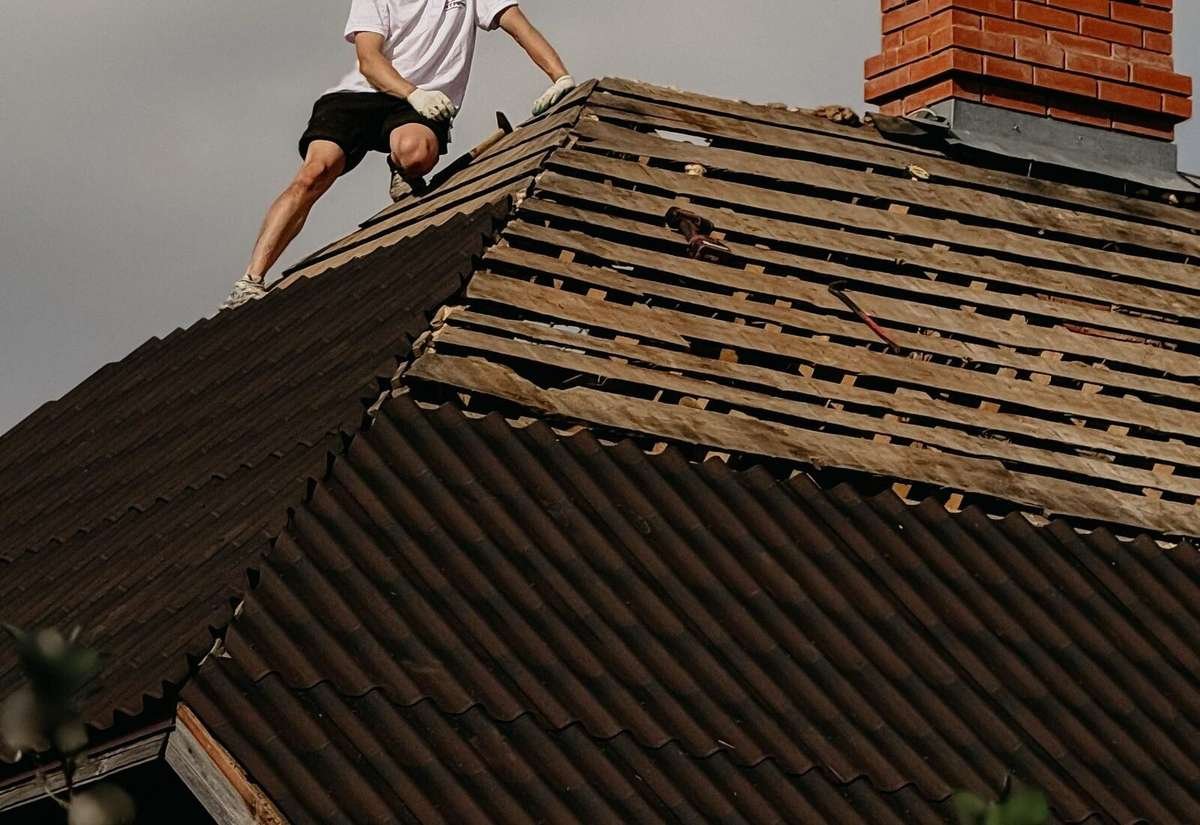
Quick answer: repair, or replace?
In Grand Rapids, repair is usually the right call when damage is isolated, one broken valley, a wind-torn section, or a single eave leak with sound decking underneath. Replacement becomes the stronger option when damage spans multiple roof planes, the roof predates Michigan’s current eave ice-barrier requirement (R905.1.2), or an ice-dam leak keeps reappearing at the same eave despite repeated patch repairs, a sign the code-required ice-and-water membrane was never installed or has failed.
Signs a repair is enough
- Damage is confined to one section or one roof plane
- Decking underneath the damaged area is still sound and dry
- No history of a leak returning to the same eave winter after winter
- The cause is a single event — wind-lifted shingles, a cracked vent boot, a torn ridge cap
Signs it’s time to replace
- Damage or wear spread across multiple roof planes, not one spot
- Roof predates Michigan’s current eave ice-barrier code
- Same eave leaks again each winter even after a repair
- Multiple layers of shingles already on the roof, limiting a code-compliant re-cover
Three factors that matter more in Grand Rapids than elsewhere
These aren’t generic repair-or-replace tips — they’re the three variables that are specific to a West Michigan roof and its winter climate.
The eave ice barrier only gets added at replacement
Michigan Residential Code R905.1.2 requires a self-adhering ice-and-water membrane at the eaves of a new or replaced roof, running at least 24 inches inside the exterior wall line. A repair doesn’t trigger that upgrade — only a permitted replacement does. Older Grand Rapids roofs re-roofed before the requirement, or with the eave detail cut short, often lack it entirely.
A recurring leak usually points to the attic, not the shingles
When a ceiling stain shows up in the same spot every winter, the cause is frequently the warm-attic, meltwater-refreeze mechanism behind ice dams, not a failing shingle field. Patch repairs at the visible leak point don’t fix that mechanism. See how ice dams actually form on Grand Rapids roofs for the full sequence.
Roof age compounds both problems at once
An older roof is more likely to predate the ice-barrier code and to have worn ventilation and flashing that make the attic-heat mechanism worse. Heritage Hill’s housing stock — roughly 82.3% built in 1939 or earlier — is a clear example of a Grand Rapids-specific case where age, code, and ventilation all intersect on the same roof.
What happens when you repair a roof that needed replacing
A cosmetic repair at the leak point can look successful for weeks or even a full summer, because the damage was never really about that one spot. If the underlying cause is a missing eave ice barrier or a warm attic feeding an ice dam, the same conditions rebuild the same failure the next time a Grand Rapids snowpack sits on the roof for a few weeks straight. Homeowners who repair the same eave two or three winters in a row are usually paying for the same problem more than once, rather than closing it.
That doesn’t mean every leak means replacement — plenty of Grand Rapids roofs get years of useful life out of a well-targeted repair. It means the decision should be based on where the damage sits, how old the roof is relative to the eave-barrier code, and whether the leak has a repeat history, not just on what’s visible from the ground.
Quick self-check
- Has this same eave or slope leaked more than once?
- Do you know if your roof has the code-required eave membrane?
- Is the roof already on its second layer of shingles?
- Is the damage in one place, or scattered across the roof?
Questions Grand Rapids homeowners ask
How do I know if my roof damage is isolated or spread across the whole roof?+
A ground-level walk-around checking each roof plane, plus an attic look for staining or daylight, usually answers this. Damage limited to one slope or one storm event typically points to a repair; staining or wear showing up on multiple planes points toward replacement.
Does a roof repair in Grand Rapids ever include the ice-barrier membrane?+
Generally no. The eave ice-and-water membrane required under Michigan Residential Code R905.1.2 is installed as part of a permitted re-roof, not a spot repair. A repair can stop an active leak, but it doesn’t add code-required eave protection that wasn’t there before.
Why does an ice-dam leak keep coming back after I patch it?+
Because the patch addresses the point where water got in, not the warm-attic mechanism that pushed it there. Until the attic-side heat loss and eave protection are addressed, the same refreeze-and-backup cycle can recur at the same spot the next time snow sits on the roof for an extended stretch.
How many layers of shingles can be on a Grand Rapids roof?+
Michigan code limits how many layers of roofing can be re-covered rather than fully torn off and replaced. A roof already on a second layer is a common trigger for a full replacement rather than another repair or re-cover.
Is a partial re-roof, replacing just one slope, allowed under Michigan code?+
It can be, depending on the scope and how the roof planes tie together, but any permitted re-roofing work in Grand Rapids still requires a residential building permit through the City’s Development Center. A licensed local roofer can confirm what a permit reviewer will actually require for a given roof.
Repair & replacement help across Grand Rapids & Kent County
We connect homeowners with licensed roofers throughout the Grand Rapids metro and surrounding West Michigan communities.
Continue the roof replacement series
Get matched with a licensed Grand Rapids roofer
Call now and we’ll connect you with a licensed West Michigan roofer who can assess the roof in person and recommend a targeted roof repair or a full roof replacement. No phone tag, no obligation.
Call now for a roofer
Independent dispatch service connecting homeowners with licensed local roofing professionals. We are not a roofing contractor.