Roof Replacement Timelines in a Grand Rapids Winter
Grand Rapids averages 77.6 inches of snow a year, and most of it — more than 60 inches — falls in exactly three months: December, January, and February. Grand Rapids Roofing Pros is an independent dispatch service connecting West Michigan homeowners with licensed local roofers year-round.
Call now for a licensed local roofer
Call now and we’ll connect you by phone with the licensed local roofer you’re matched with — no phone tag, no obligation.
Ready to talk to someone about your roof?
Call to reach the licensed local roofer you’re matched with in Grand Rapids & West Michigan.
Call (901) 704-8932When you call, stay on the line for a few seconds while we match you with the licensed local roofer for your area. Have your address and a quick description of the problem ready.
We connect homeowners with independent licensed roofing professionals in the Grand Rapids area. We are not a licensed contractor and do not perform roofing work ourselves.
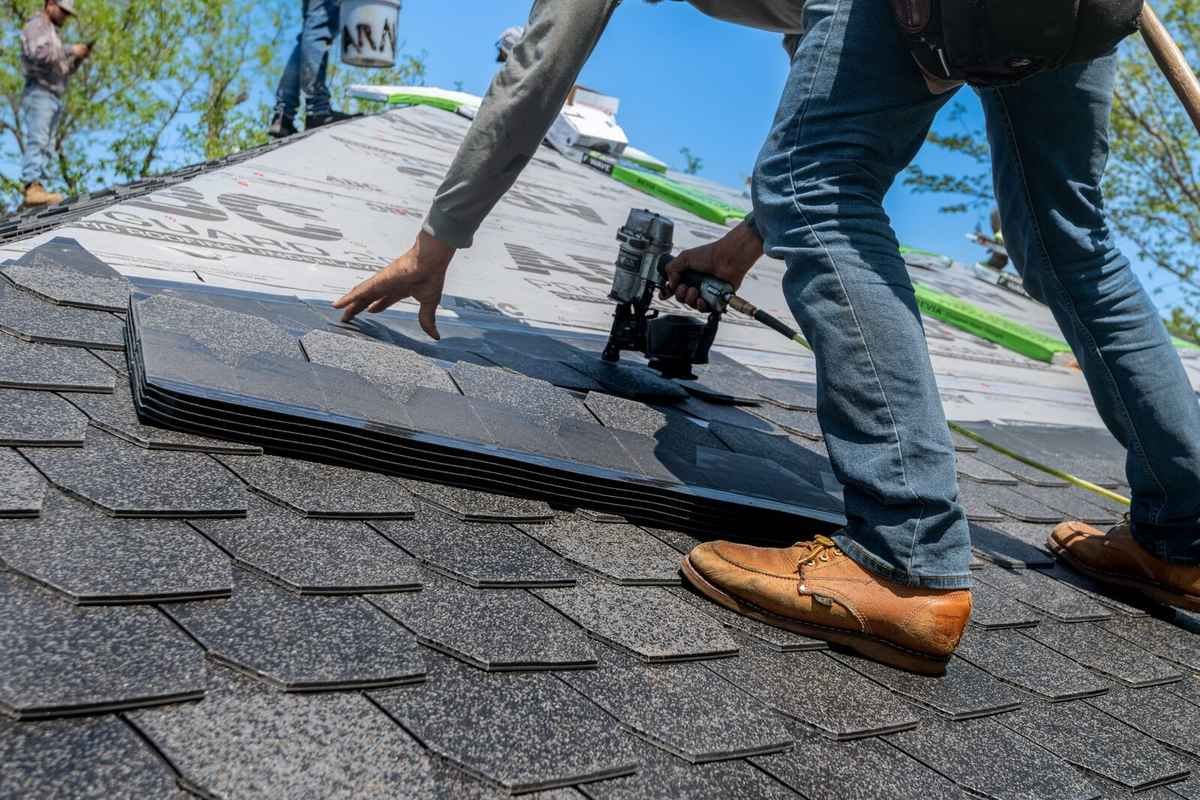
Quick answer: when can a Grand Rapids roof actually be replaced?
Most full roof replacements in Grand Rapids are scheduled from late spring through fall, when temperatures reliably support proper shingle adhesive sealing and the roof deck can stay dry and snow-free for the length of the job. A winter replacement is still physically possible and sometimes necessary — storm damage or an active interior leak generally can’t wait for warmer weather — but it typically involves modified materials or techniques and more schedule uncertainty than a project timed to the warm months.
What’s realistic in each Grand Rapids season
Snowfall isn’t evenly spread across a West Michigan year — and neither is the practical window for a full roof replacement.
Spring (Mar–May)
Snow tapers from about 7.6″ in March to 2.0″ in April, but freeze-thaw swings continue. Scheduling ramps up as the deck dries out and stays that way.
Summer (Jun–Aug)
Peak installation season. Consistent warm, dry weather gives shingle adhesive the best conditions to seal properly and keeps the job on a predictable timeline.
Fall (Sep–Nov)
The last full-scope window before winter. Demand rises as homeowners try to finish before the December snowpack sets in, so earlier scheduling matters here.
Winter (Dec–Feb)
December alone averages 20.8″ of snow, with January and February close behind. Full replacements are still possible but are largely reserved for storm damage or active leaks that can’t wait.
The snowpack behind the scheduling squeeze
It isn’t just cold temperatures that complicate a winter replacement — it’s that Grand Rapids holds a standing snowpack on roofs for weeks at a stretch during exactly the months a tear-off would need a clear, dry deck.
Average December snowfall at Gerald R. Ford International Airport (NOAA climate normals, 1991–2020).
January is Grand Rapids’ snowiest month on average — the core of the low-installation window.
Average days per year with 5 inches or more of snow depth on the ground, concentrated in Jan–Feb.
Average days per year with a standing pack of 10 inches or more — a deck that’s rarely clear for long.
The same standing snowpack that drives ice-dam risk (see how ice dams form on Grand Rapids roofs) is what makes a clear, dry deck hard to guarantee for weeks at a time in the heart of winter. Source: Current Results — Grand Rapids snowfall and snow-depth data (NOAA/NCEI Climate Normals, GRR).
When a winter replacement can’t wait
- Active interior leaking or visible daylight through the deck
- Storm damage that has compromised a large section of the roof
- Structural exposure that risks further damage if left through the season
- An ice-dam leak recurring badly enough that patch repairs aren’t holding
When it’s worth waiting for a warmer window
- Cosmetic wear or granule loss with no active leak
- A roof nearing the end of its service life but still weathertight
- Planned replacement with no urgent damage driving the timeline
- Projects where the homeowner wants full material and color options
Why “whenever it’s convenient” doesn’t quite work here
Shingle adhesive needs warmth to seal
Asphalt shingle sealant strips bond as they warm in the sun. Cold-weather installations can still be done with modified techniques, but a mid-summer or early-fall install gives the adhesive the most reliable conditions to seal on its own.
A standing snowpack removes the deck-exposure window
Grand Rapids holds 5 inches or more of snow on the ground nearly 29 days a year on average, concentrated in January and February — days when a tear-off can’t safely proceed with an exposed deck.
Waiting too long into fall means competing for the last slots
Because December snowfall arrives on schedule most years, fall demand for full replacements rises sharply as homeowners try to beat the season, which is why early fall scheduling — not last-minute — keeps more options open.
Questions Grand Rapids homeowners ask
Can a roof actually be replaced in a Michigan winter?+
Yes, it’s physically possible with modified materials and techniques, but it’s harder to schedule reliably because of cold-weather sealing limitations and Grand Rapids’ standing snowpack. Winter replacements are usually reserved for storm damage or an active leak that can’t wait for a warmer window.
What time of year is best for a Grand Rapids roof replacement?+
Late spring through fall generally offers the most reliable conditions, with summer giving shingle adhesive the warmest, most consistent sealing weather. Scheduling early in the fall window helps avoid competing for the last slots before winter demand and snowfall arrive.
Does cold weather affect how shingles seal to the roof?+
Yes. Asphalt shingle sealant strips bond as they warm, typically from sun exposure after installation. In colder conditions, a licensed roofer may use hand-sealing or other cold-weather techniques to compensate.
What happens if a roof is left unreplaced through a Grand Rapids winter?+
A roof that already has active damage or a weak point can deteriorate further under a Grand Rapids winter’s standing snowpack and freeze-thaw cycling, which is part of why storm-damaged or actively leaking roofs are treated as a different scheduling priority than cosmetic wear.
How far in advance should I schedule a fall roof replacement in Grand Rapids?+
As early as practical. Fall is the last full-scope window before the December snowpack typically arrives, so demand for that window tends to be highest in the weeks right before it closes.
Replacement scheduling help across Grand Rapids & Kent County
We connect homeowners with licensed roofers throughout the Grand Rapids metro and surrounding West Michigan communities.
Continue the roof replacement series
Get matched with a licensed Grand Rapids roofer
Call now and we’ll connect you with a licensed West Michigan roofer to talk through realistic scheduling for a Grand Rapids roof replacement, whichever season you’re in. No phone tag, no obligation.
Call now for a roofer
Independent dispatch service connecting homeowners with licensed local roofing professionals. We are not a roofing contractor.