Older Home vs. New Construction Roofing Needs in Grand Rapids
Older homes and new construction fail differently on a Grand Rapids roof, and the difference isn’t just age — it’s geometry and retrofit status. Pre-1940s homes near the city core often predate modern ventilation and the eave ice-barrier code, while newer custom homes on wooded lots tend to carry complex, multi-plane rooflines with far more valleys where snow concentrates. Grand Rapids Roofing Pros is an independent dispatch service connecting homeowners with licensed local roofers who assess both.
Call now for a licensed local roofer
Call now and we’ll connect you by phone with the licensed local roofer you’re matched with — no phone tag, no obligation.
Ready to talk to someone about your roof?
Call to reach the licensed local roofer you’re matched with in Grand Rapids & West Michigan.
Call (901) 704-8932When you call, stay on the line for a few seconds while we match you with the licensed local roofer for your area. Have your address and a quick description of the problem ready.
We connect homeowners with independent licensed roofing professionals in the Grand Rapids area. We are not a licensed contractor and do not perform roofing work ourselves.
Quick answer: does home age change what your roof needs?
Quick answer: Yes, in two different ways. Older Grand Rapids homes, especially in the pre-1940s historic core, were often built before the modern eave ice-barrier code (R905.1.2) and before today’s insulation and ventilation standards, so their steep, ornate rooflines often need a retrofit rather than a like-for-like repair. Newer custom homes are already code-built but often carry complex, multi-plane rooflines with many valleys and dormers that concentrate snow and ice regardless of age. A licensed local roofer can assess either issue.
Older homes: retrofit, not just repair
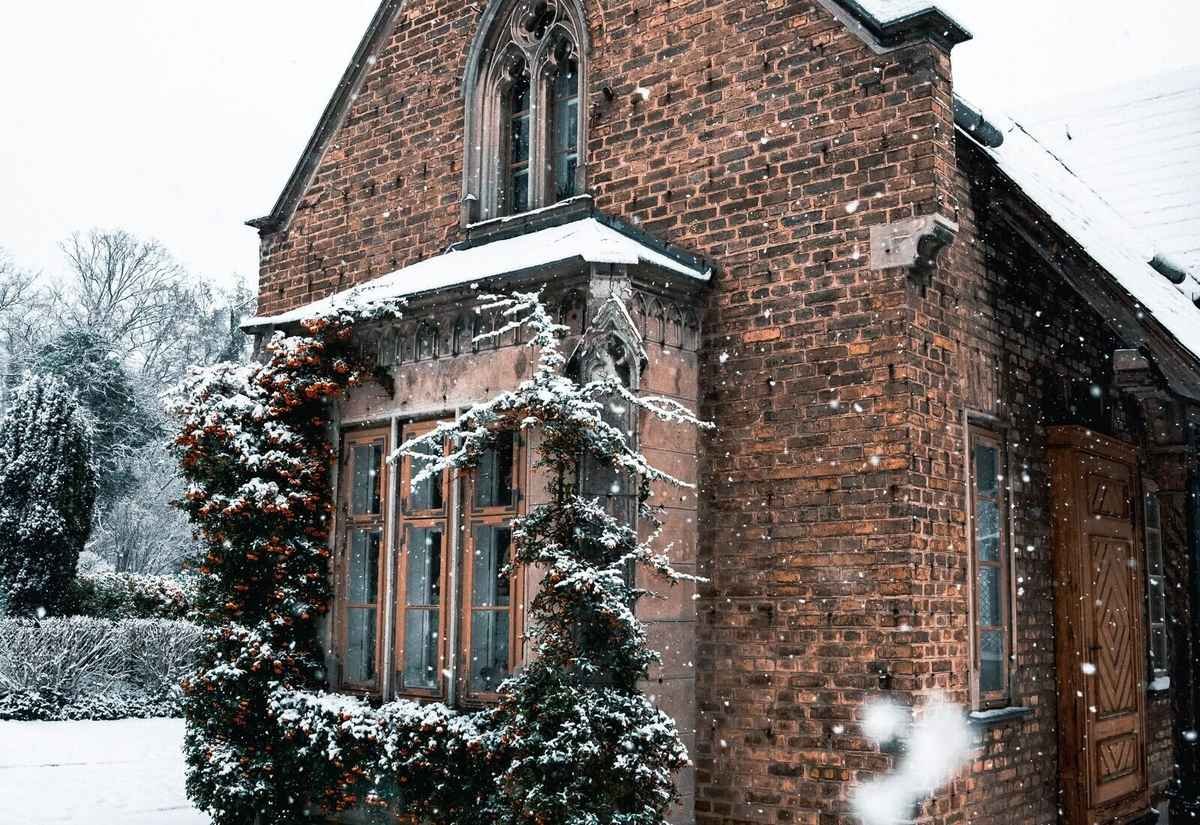
Heritage Hill, Grand Rapids’ oldest neighborhood, typifies the near-downtown stock: roughly 1,300 historic homes with 82.3% built in 1939 or earlier, across 60+ architectural styles, with steep, complex Victorian and Foursquare rooflines and deep eaves. Attics in homes this age were never designed for modern insulation and ventilation levels, and many predate the current Michigan eave ice-barrier requirement entirely.
That combination — deep eaves, minimal attic ventilation, and a possibly-missing ice barrier — is exactly the recipe for the warm-attic ice-dam mechanism. A repair on a roof like this often needs to address the attic side, not just the shingle surface.
Newer custom-built homes
Communities like Ada, Cascade Township, and the Forest Hills area are known for newer, larger custom homes on wooded or acreage lots with complex, multi-plane rooflines — many valleys, dormers, and roof-to-wall intersections. That geometry means more places for snow and ice to concentrate, and upper roof planes that shed snow onto lower ones, raising valley-leak and ice-dam exposure even on a modern, well-built, fully code-compliant roof.
Older home roofs vs. new construction roofs
Different housing eras, different roof-risk profiles — and different priorities during an inspection.
Older Home (pre-1940s core)
Steep, ornate rooflines; retrofit-era attics
- Steeper pitches naturally shed snow faster than a low-slope roof
- Deep eaves and mature construction often mean a well-built structural base
- May predate the modern eave ice-barrier code entirely
- Attic insulation and ventilation frequently weren’t designed for today’s standards
- Ornate rooflines (dormers, turrets, multiple eave lines) complicate any retrofit
New Construction (custom, wooded lots)
Complex, multi-plane rooflines; code-built from day one
- Built to current code, including the eave ice barrier from the start
- Modern insulation and ventilation standards typically already in place
- Many valleys and dormers concentrate snow and ice in multiple spots
- Upper roof planes can shed snow directly onto lower ones, adding load
- Complex geometry means more roof-to-wall intersections that need careful flashing
What to ask for during an inspection
- If your home predates 1970 or so: ask specifically whether the eave has a code-compliant ice-and-water membrane, and whether attic insulation and ventilation meet current standards.
- If your home has a complex, multi-valley roofline: ask the roofer to walk each valley and dormer individually rather than assessing the roof as one surface.
- Either way: ask whether previous leaks trace to a retrofit gap (older home) or a geometry pinch point (newer home) — the fix looks different for each.
Neither an older home nor a new custom build is automatically the “easier” roof. Older homes more often need an attic-side retrofit; newer custom homes more often need careful, geometry-aware valley and flashing work. A licensed roofer who inspects your specific roof — not just its age — can tell you which applies.
Questions Grand Rapids homeowners ask
Is an older Grand Rapids home more likely to have ice dams?+
Often, yes, because older homes near the historic core may predate the current eave ice-barrier code and modern attic ventilation standards. That combination is a common driver of ice dams, though it isn’t automatic — a well-maintained older home can still perform well.
Why would a brand-new custom home have roof problems at all?+
New construction is typically code-built, but complex custom rooflines with many valleys and dormers create more places for snow and ice to concentrate. The risk shifts from code and insulation gaps to roof geometry and flashing detail.
Does my home’s neighborhood tell me anything about its roof risk?+
Broadly, yes. Areas with a high concentration of pre-1940s housing tend to share retrofit-era attic characteristics, while newer custom-home communities tend to share complex-roofline characteristics. It’s a useful starting point, not a substitute for an actual inspection.
Should I have my roof inspected differently based on its age?+
The inspection itself is similar, but what the roofer prioritizes should differ — attic insulation, ventilation, and ice-barrier presence on an older home; valley-by-valley and flashing detail on a newer, complex-roofline home.
Can an older home be brought up to the same standard as new construction?+
In most cases, yes, through a proper replacement or targeted retrofit that adds the code-compliant ice barrier and corrects attic insulation and ventilation. A licensed roofer can outline what that involves for your specific roof.
Next steps for either home type
Two housing profiles, one service area
Get an inspection matched to your home’s profile
Call now and a licensed West Michigan roofer will assess what your specific home actually needs. No phone tag, no obligation.
Call now for a roofer
Independent dispatch service connecting homeowners with licensed local roofing professionals. We are not a roofing contractor.