Roof Pitch Across Grand Rapids Neighborhoods, Explained
Roof pitch in Grand Rapids is not one number — it swings sharply depending on which era and part of the metro a home was built in, and that variation matters because pitch is one of the biggest single factors in how a roof handles the area’s standing snowpack. Grand Rapids Roofing Pros is an independent dispatch service that connects homeowners with licensed local roofers who know these distinct roof types; we do not perform roofing work ourselves.
Call now for a licensed local roofer
Call now and we’ll connect you by phone with the licensed local roofer you’re matched with — no phone tag, no obligation.
Ready to talk to someone about your roof?
Call to reach the licensed local roofer you’re matched with in Grand Rapids & West Michigan.
Call (901) 704-8932When you call, stay on the line for a few seconds while we match you with the licensed local roofer for your area. Have your address and a quick description of the problem ready.
We connect homeowners with independent licensed roofing professionals in the Grand Rapids area. We are not a licensed contractor and do not perform roofing work ourselves.
Quick answer: how roof pitch differs across the Grand Rapids metro
Grand Rapids’ roof pitches vary by neighborhood age: Heritage Hill’s pre-1939 core runs steep Victorian and Foursquare pitches with deep eaves, Wyoming and Kentwood’s 1950s–70s ranch belt runs long, low-slope rooflines, and newer Ada and Cascade Township builds run multi-plane rooflines with more valleys. Pitch changes how snow and ice behave on a roof, so a licensed local roofer typically sees a different set of problems in each part of the metro.
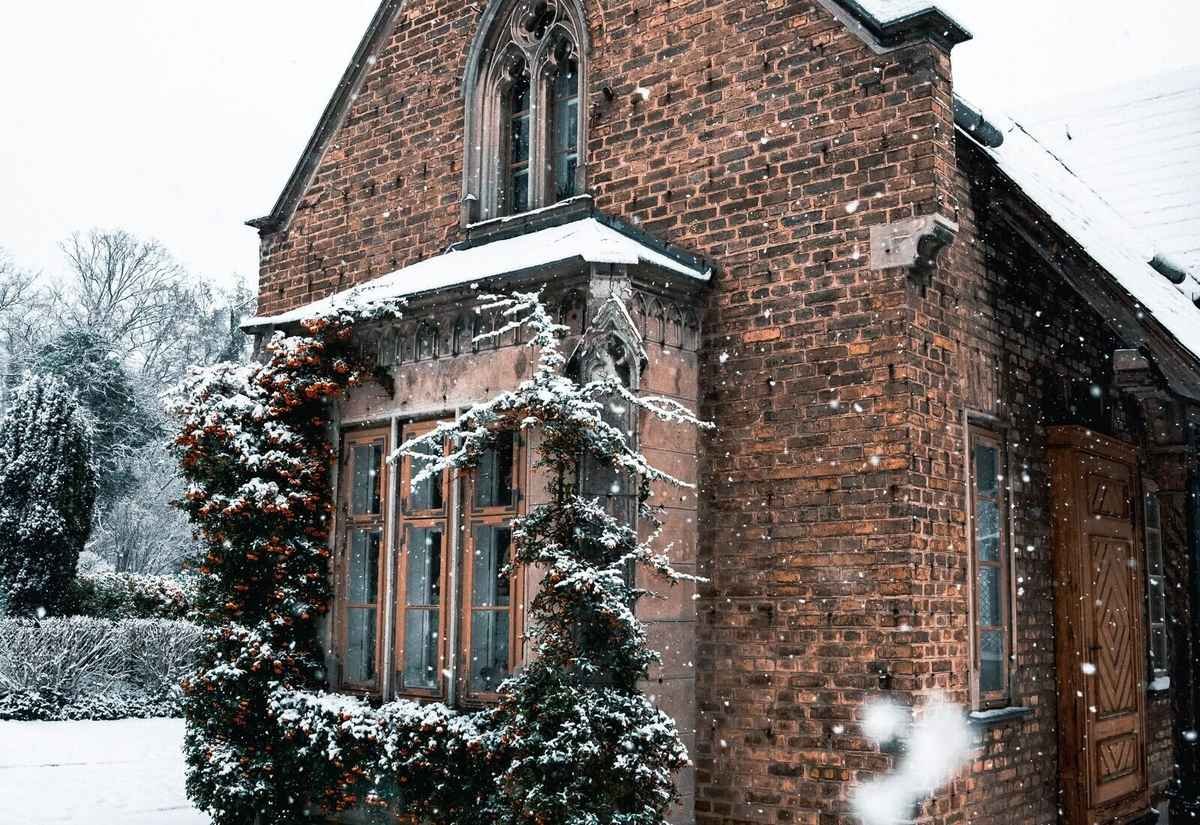
Does a steeper roof mean less ice-dam risk?
Not necessarily — it changes where the risk concentrates rather than eliminating it. A steep, complex historic roofline sheds snow faster on the open slopes but concentrates ice and meltwater at valleys, dormers, and eave transitions. A long, low-slope ranch roof holds snow longer across a wider, shallower eave shelf, giving meltwater a bigger area to refreeze on. A multi-plane custom roof adds a third variable: upper roof sections shedding snow onto lower ones, and more valleys where ice can build. Each geometry needs the eave ice barrier that Michigan code requires, but where a roofer focuses attention during an inspection differs by type.
For the historic-core specifics, see our Heritage Hill roofing guide; for the low-slope ranch belt, our Wyoming and Kentwood pages; for the complex-roofline belt, our Ada guide.
Three roof-pitch profiles at a glance
- Steep, historic core — Heritage Hill & near-downtown
- Low-slope ranch/split-level — Wyoming & Kentwood
- Complex multi-plane, custom — Ada, Cascade, Forest Hills
- Each profile needs the same code-required ice barrier, applied differently
What does each profile actually look like on the ground?
Same climate, same code — three different roof-geometry challenges depending on where in the metro a home sits.
Heritage Hill & the historic core
82.3% of Heritage Hill homes were built in 1939 or earlier — steep Victorian and Foursquare rooflines with deep eaves, often retrofitted for modern insulation and ventilation rather than built for it.
Wyoming & Kentwood
Post-war baby-boom-era ranch and split-level construction through the 1950s–70s — long, low-slope eave runs and, on split-levels, a plane-to-plane step with a short attic run above it.
Ada, Cascade & Forest Hills
Newer, larger custom homes on wooded acreage lots with complex, multi-plane rooflines — many valleys and roof-to-wall intersections where snow concentrates.
What sourced data backs up these three profiles?
These are specific, cited housing-construction figures for named Grand Rapids-area communities, not a general estimate.
Share of homes built in 1939 or earlier in the city’s oldest, steepest-roofed neighborhood.
The baby-boom decades when most of the low-slope ranch/split-level stock went up.
Typical wooded-lot custom development scale supporting complex, multi-plane rooflines.
Michigan Residential Code R905.1.2 minimum ice-barrier run, the same across every profile.
Sources: NeighborhoodScout — Heritage Hill; What’s Up Wyoming — baby boom ranch/split-level construction; Ada Grove development (Eastbrook Homes); Michigan Residential Code R905.1.2.
Questions Grand Rapids homeowners ask
What’s the typical roof pitch in Grand Rapids?+
There isn’t one typical pitch for the whole metro. Heritage Hill and the older near-downtown core run steep, historic pitches. Wyoming and Kentwood are dominated by low-slope ranch and split-level roofs from the baby-boom era. Ada, Cascade, and Forest Hills feature newer, complex multi-plane custom rooflines.
Does a steeper roof pitch mean lower ice-dam risk?+
Not necessarily. A steep roof sheds open-slope snow faster but concentrates risk at valleys, dormers, and eave transitions. A low-slope ranch roof holds snow longer across a wider eave shelf. Every pitch profile has its own ice-dam risk pattern, not a simple more-or-less relationship.
Why does Heritage Hill have such steep, complex roofs?+
82.3% of Heritage Hill homes were built in 1939 or earlier, reflecting the Victorian and Foursquare architectural styles popular in that era, which favored steep, complex rooflines with deep eaves.
Why are Wyoming and Kentwood roofs so different from Heritage Hill’s?+
Wyoming and Kentwood grew fastest during the post-war baby boom of the 1950s and ’60s, when developers built single-story ranches and, a bit later, split-levels across much of both cities, a different housing-stock era and roof geometry than the steep, pre-1940s core near downtown.
Does Grand Rapids Roofing Pros work on all roof pitch types?+
We are an independent dispatch service that connects homeowners across the metro, regardless of roof pitch or geometry, with licensed local roofers experienced in that specific roof type; we do not perform roofing work ourselves.
Roof-pitch-aware matching across Grand Rapids
Part of the broader West Michigan roofing resource from Grand Rapids Roofing Pros.
Continue the FAQ & comparison series
Get matched with a licensed Grand Rapids roofer
Call now and we’ll connect you with a licensed local roofer experienced with your neighborhood’s roof geometry. No phone tag, no obligation.
Call now for a roofer
Independent dispatch service connecting homeowners with licensed local roofing professionals. We are not a roofing contractor.