Attic Ventilation & Ice Dam Prevention in Grand Rapids
Attic ventilation is the second line of defense against ice dams on Grand Rapids roofs: balanced soffit-to-ridge airflow continuously flushes out whatever heat leaks past your insulation, keeping the roof deck cold enough that the West Michigan snowpack sitting on it has nothing to melt. Without that airflow, even a well-insulated attic can run warm enough to feed a dam. Grand Rapids Roofing Pros is an independent dispatch service that connects West Michigan homeowners with licensed local roofers for ventilation retrofits.
Call now for a licensed local roofer
Call now and we’ll connect you by phone with the licensed local roofer you’re matched with — no phone tag, no obligation.
Ready to talk to someone about your roof?
Call to reach the licensed local roofer you’re matched with in Grand Rapids & West Michigan.
Call (901) 704-8932When you call, stay on the line for a few seconds while we match you with the licensed local roofer for your area. Have your address and a quick description of the problem ready.
We connect homeowners with independent licensed roofing professionals in the Grand Rapids area. We are not a licensed contractor and do not perform roofing work ourselves.
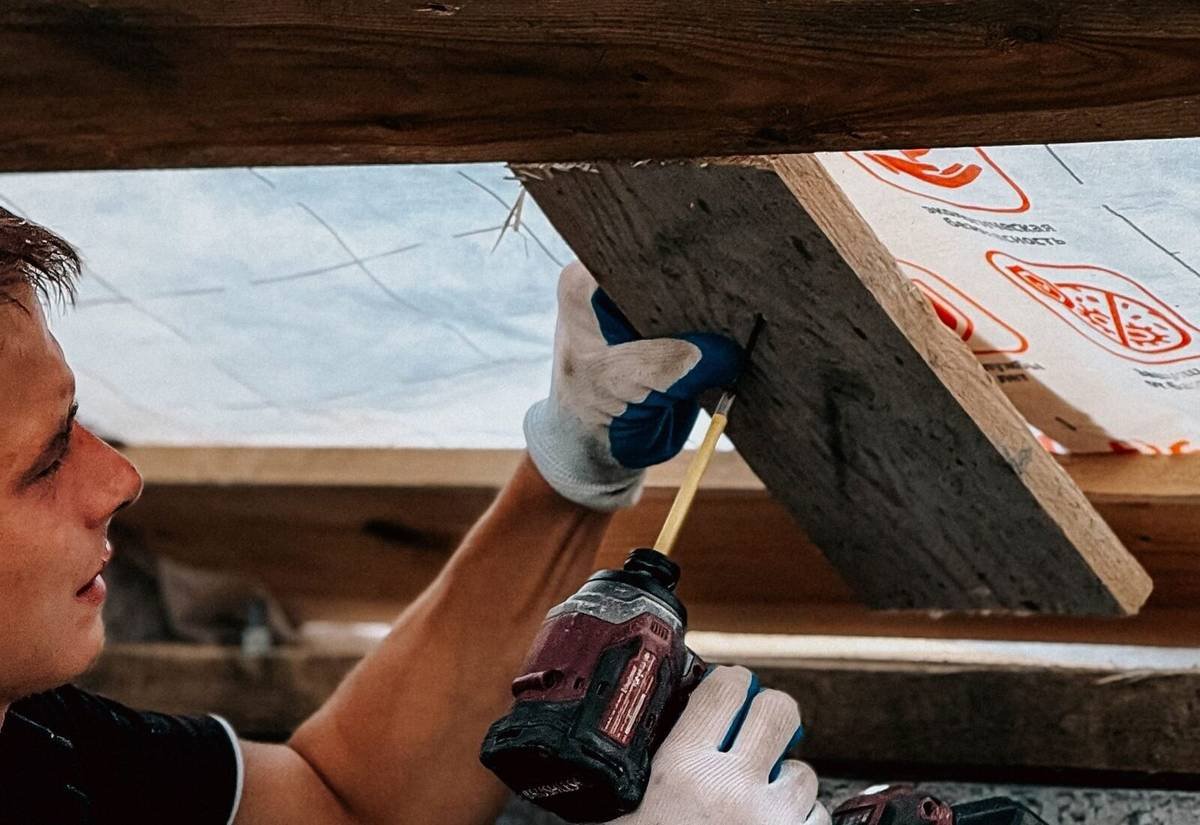
What is attic ventilation, and how does it stop ice dams?
Attic ventilation is a continuous exchange of outside air: cold air enters low at the soffit and exits high at the ridge, carrying away heat that leaks past insulation and keeping the roof deck close to outdoor temperature. A cold deck has nothing to melt the snow sitting on it, the mechanism every Grand Rapids ice dam needs to start. A licensed local roofer can check whether your soffit-to-ridge airflow meets that standard.
Intake and exhaust have to work together
Ventilation only works when intake and exhaust are roughly balanced. Soffit vents at the eaves are the intake — they need to stay clear of insulation, paint, and debris, and ideally have a baffle (a rigid channel) holding insulation back so airflow isn’t blocked at the exact point it enters. Ridge vents or upper roof vents are the exhaust, pulling that air out at the peak as it warms slightly and rises.
If intake is blocked but exhaust is open, the system can actually pull conditioned air out of the living space instead of outside air through the soffits — making the problem worse, not better. That is why a ventilation check is never just “is there a ridge vent” — the soffit side matters just as much.
Why Grand Rapids ventilation retrofits aren’t one-size-fits-all
West Michigan’s housing ages and roof geometries create three genuinely different ventilation challenges — not generic advice that applies everywhere.
Historic core: retrofit-only attics
Near-downtown neighborhoods like Heritage Hill are dominated by homes built in 1939 or earlier — roughly 82% of the district — with steep, complex Victorian and Foursquare rooflines and attics that predate any modern ventilation standard. Adding soffit and ridge venting to these roofs is a retrofit project, not a checkbox.
Post-war ranch & split-level belt
Wyoming and Kentwood are dominated by 1950s–70s ranch and split-level construction. Long, low-slope ranch eaves and split-level roof intersections create short attic runs where plane meets plane — complicating a clean, continuous soffit-to-ridge airflow path.
Newer complex-roofline homes
Ada, Cascade Township, and the Forest Hills area feature newer custom homes with multiple valleys, dormers, and roof-to-wall intersections. More roof planes mean more places where a soffit run gets interrupted, even on a well-built, modern home.
How to tell your ventilation isn’t working
Frost on the roof deck
On a cold morning, frost or dampness on the underside of the roof sheathing points to warm, moist air that isn’t being flushed out.
Hot attic in summer
An attic that feels dramatically hotter than outside air on a summer afternoon usually shares the same blocked-airflow root cause as a winter ice-dam problem.
Ice dams despite good insulation
If insulation depth looks adequate but ice dams still form, blocked or missing ventilation is the next place to look.
No visible soffit airflow
Standing under the eave and seeing insulation pressed right up against the vent openings, with no daylight or airflow, is a clear intake blockage.
What you can check yourself vs. what needs a retrofit
Diagnosing a ventilation problem is often homeowner-accessible; correcting it usually isn’t.
You can check
- Look up at the soffit from below the eave for visible vent openings and airflow.
- From inside the attic, confirm insulation isn’t piled against the eave, blocking intake.
- Confirm a ridge or roof vent exists at the peak and isn’t painted shut or covered by debris.
- Note whether the attic feels noticeably hot in summer or shows frost in winter.
A retrofit usually needs a pro
- Installing rafter baffles to hold insulation clear of soffit vents without disturbing existing insulation.
- Adding intake or exhaust capacity on a historic or complex roofline where a clean soffit-to-ridge run doesn’t already exist.
- Balancing intake and exhaust correctly — too much of one without the other can pull conditioned air from the house.
- Combining a ventilation fix with the insulation and eave ice-barrier work it’s usually paired with.
Ventilation is fighting a multi-week snowpack, not one storm
Grand Rapids attics don’t just need to survive a snowstorm — they need to stay cold under weeks of standing snow.
Average annual snowfall at Gerald R. Ford International Airport (NOAA climate normals, 1991–2020).
Average days per year with 5 inches or more of standing snow depth — weeks of continuous exposure for a warm roof deck.
Average days per year with a 10-inch-plus pack, concentrated in January–February.
Share of the historic district built in 1939 or earlier — homes whose attics predate modern ventilation standards.
Sources: Current Results — Grand Rapids snowfall and snow-depth normals (NOAA/NCEI); mechanism per MSU Extension — preventing ice dams; Heritage Hill housing-age data via NeighborhoodScout.
Questions West Michigan homeowners ask
Can more insulation replace the need for ventilation?+
No. Insulation slows heat from reaching the attic; ventilation removes whatever heat gets through anyway. They solve different halves of the same problem, and a heavily insulated attic with blocked ventilation can still run warm enough to feed an ice dam.
My roof doesn’t have a ridge vent — is that a problem?+
It depends on the roof design and what exhaust ventilation exists instead, such as roof-mounted box vents. What matters is that intake at the soffit and exhaust higher on the roof are both present and roughly balanced — a licensed roofer can assess whether your specific setup is adequate.
Why is ventilation harder on older Grand Rapids homes?+
Homes built before modern ventilation standards, common in neighborhoods like Heritage Hill, often have complex historic rooflines and attics that were never designed with a continuous soffit-to-ridge air path. Adding proper ventilation is a genuine retrofit rather than a simple vent swap.
Can I add ventilation without a full roof replacement?+
Often, yes. Soffit vents, baffles, and additional exhaust vents can frequently be added or corrected without replacing the roof, though the scope depends on your specific attic and roofline. A licensed roofer can evaluate what your home needs.
Ventilation assessments across Grand Rapids & Kent County
We connect homeowners with licensed roofers throughout the Grand Rapids metro and surrounding West Michigan communities.
Continue the ice dam series
Get matched with a licensed Grand Rapids roofer
Call now and we’ll connect you with a licensed West Michigan roofer for an attic ventilation assessment. No phone tag, no obligation.
Call now for a roofer
Independent dispatch service connecting homeowners with licensed local roofing professionals. We are not a roofing contractor.