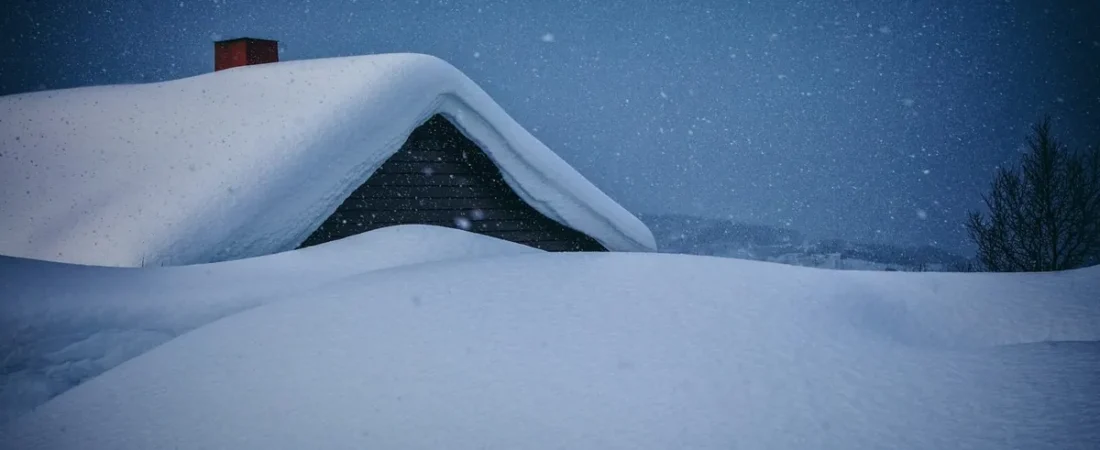
After any heavy lake-effect snowfall, three rooftop penetrations deserve a look from the ground: the furnace or water-heater flue, the plumbing vent stack, and your attic exhaust vents. Deep snow or a frost cap on the first two can push combustion exhaust or sewer gas back into the house — a safety problem, not just a roof problem. Check them from the yard with binoculars, clear what you can reach safely from the ground, and bring in a professional for anything that requires getting on a snow-loaded roof.
Ready to talk to someone about your roof?
Call to reach the licensed local roofer you’re matched with in Grand Rapids & West Michigan.
Call (901) 704-8932When you call, stay on the line for a few seconds while we match you with the licensed local roofer for your area. Have your address and a quick description of the problem ready.
Grand Rapids measures its winters in feet, not inches — roughly 77 inches of snow in a normal season, with the heaviest bands arriving in December and January lake-effect events that can bury a roof overnight (NOAA climate normals). Most homeowners think about the shingles and the eaves after a dump like that. Far fewer think about the small pipes and caps poking through the roof plane — and those are the ones that can make a snow problem a health problem.
Which Roof Vents Matter After a Snowstorm?
A typical West Michigan roof has three kinds of penetrations, and they fail differently under snow:
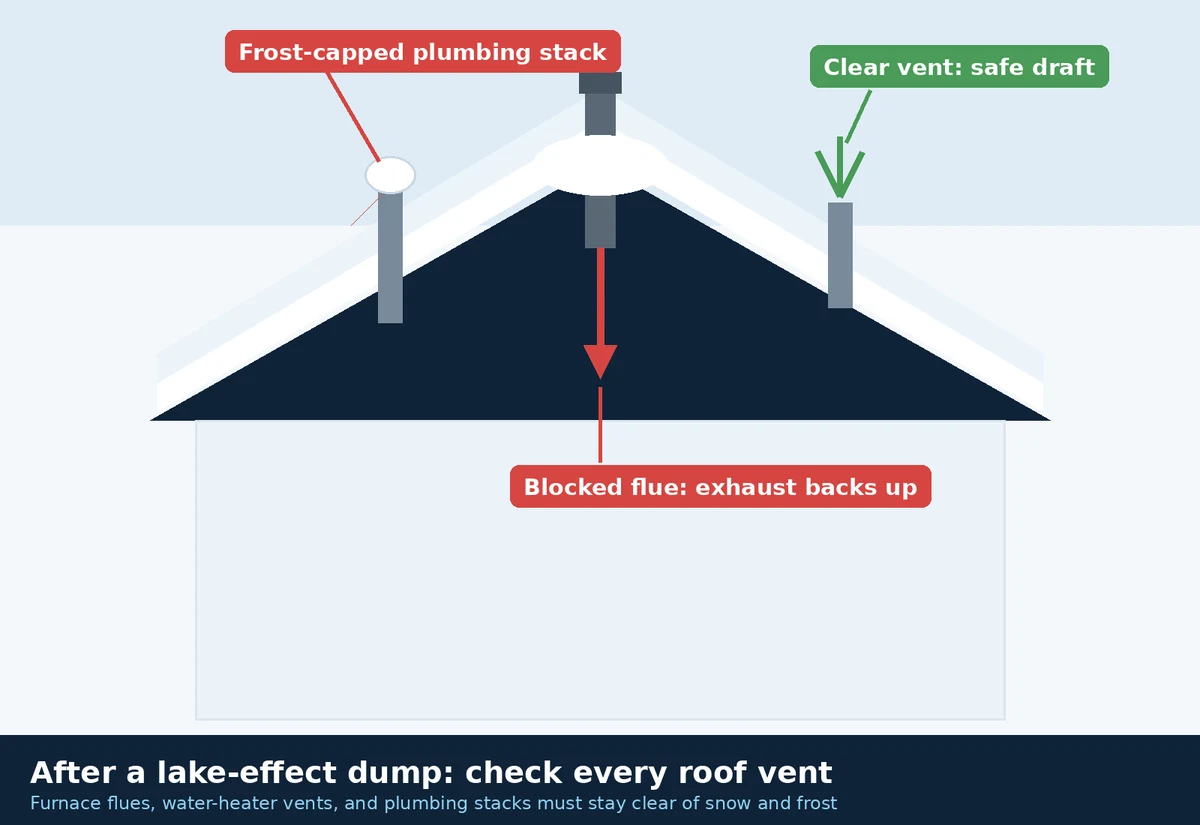
- Combustion flues — the metal chimney pipe serving an older natural-draft furnace or a gas water heater. If snow buries or bridges over the termination, exhaust that should rise out of the house can spill back down the flue.
- Plumbing vent stacks — the open pipes that let your drain system breathe. They exhaust warm, moist air, which in a deep freeze can condense and freeze into a frost cap that slowly seals the pipe shut.
- Attic vents — ridge, box, or gable vents that keep the attic cold. Drifted snow that blocks them traps warm air in the attic, which accelerates the melt-refreeze cycle behind ice dam formation.
Why Is a Blocked Furnace Flue Dangerous?
Because the failure is invisible. A natural-draft appliance relies on rising hot gas to carry carbon monoxide out of the house; block the outlet and the exhaust finds the path of least resistance, which can be back into the utility room. The CDC attributes hundreds of U.S. deaths every year to unintentional carbon monoxide poisoning, and winter storms are a recognized spike period precisely because snow blocks vents and flues. Michigan utilities repeat the same advisory every winter: after heavy snow, confirm that appliance vents — roof terminations and sidewall PVC vents alike — are clear.
Two practical notes for Grand Rapids housing stock specifically. Older homes in neighborhoods like Heritage Hill are more likely to have natural-draft flues terminating at the roof, where deep snow and drifting matter most. Newer builds usually run high-efficiency furnace exhaust out a sidewall in white PVC — lower, easier to check, but also easier for a plow drift or sliding roof snow to bury completely.
What Does a Frozen Plumbing Vent Look Like From Inside?
A frost-sealed stack announces itself at the fixtures, not the roof: drains that gurgle, a toilet that bubbles when the tub empties, and eventually sewer odor as traps get siphoned dry. It happens during exactly the weather Grand Rapids gets in a January–March cold stretch — days of subzero wind chill where the moist air rising off the drain system freezes to the pipe walls faster than daytime warmth can clear it. Smaller-diameter vents and vents on the shaded north slope freeze first.
The homeowner-safe response is patience plus heat from below: run warm water periodically and let the daytime cycle work. What it is not: climbing onto an iced roof with a kettle. If a stack stays sealed for days, a roofer or plumber with proper fall protection can clear it in minutes.
How Do You Check Vents Without Getting on the Roof?
- From the yard, with binoculars: after each significant snowfall, scan every penetration. You are looking for pipes shortened or erased by snow depth, frost mushrooms on stack tops, and drifting bridged over ridge vents.
- At the meter and sidewall: clear a two-foot radius around gas meters and any low PVC exhaust/intake pair. This part is safe to do yourself with a broom — gentle strokes, no shovel edges near the pipe.
- Inside the house: a CO alarm on every level is the backstop the CDC recommends; a hardware-store alarm is cheap insurance against everything this article describes.
- Listen to the plumbing: gurgles and slow drains during a deep freeze are a vent symptom, not a clog symptom, more often than people expect.
When Should a Professional Clear the Roof Instead?
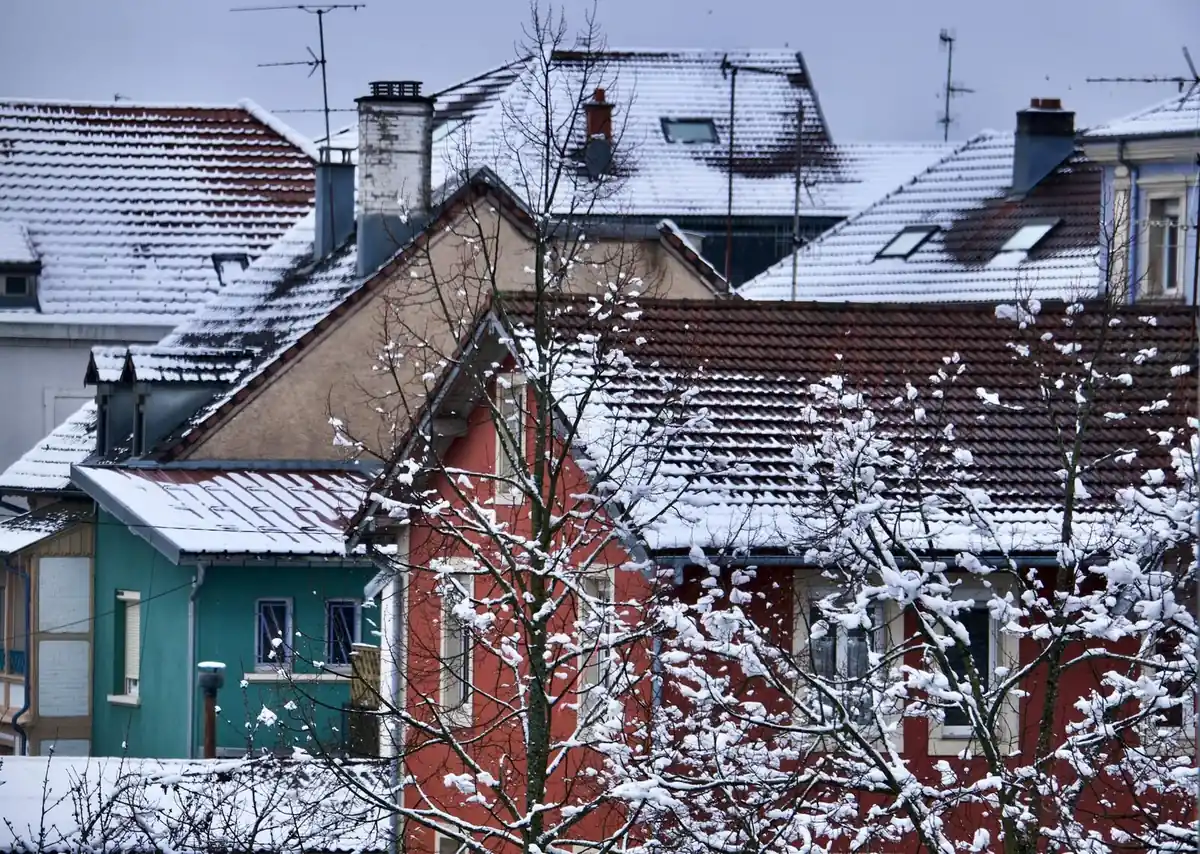
Any time the fix requires leaving the ground. A snow-loaded roof hides its edges, its skylights, and its ice; it is the same reason we draw a hard line at DIY ice dam work. Professional roof snow removal in Grand Rapids pairs vent clearing with load relief — the crew that pulls the snowpack off your eaves can open every penetration on the way, confirm the flue cap is intact, and flag damage while they are up there. If the blockage has already caused a leak or an ice ridge, that escalates to ice dam removal.
It also belongs on the prevention calendar: the fall roof inspection is the moment to confirm vent caps are secured, stack flashings are sealed, and attic ventilation is balanced — so the winter checks above become a formality instead of an emergency.
Roof buried and vents nowhere in sight? Get matched with a licensed, insured local roofer for safe roof snow removal — free matching, no obligation.
FAQ
How much snow does it take to block a roof vent?
There is no fixed number — drifting matters more than depth. A 10-inch storm with wind can bury a leeward-slope stack that a calm 15-inch snowfall leaves clear. That is why the after-storm binocular check beats any rule of thumb.
Can I pour hot water on a frost-capped plumbing vent?
Not from the roof, and pouring from a ladder top is nearly as risky. Ground-reachable sidewall vents can be cleared by hand or broom. For roof stacks, warmth from indoors plus daytime sun clears most frost caps; persistent ones are a quick job for a professional with fall protection.
Do carbon monoxide alarms make vent checks unnecessary?
No — they are the last line of defense, not the first. Alarms trigger after CO is already in your air. Keeping flues clear prevents the exposure; the alarm exists for the failure you did not catch.
Will a blocked attic vent damage the roof itself?
Indirectly, yes. Blocked attic exhaust traps heat, warms the roof deck, and accelerates the melt-refreeze cycle that builds ice dams along Grand Rapids eaves. Persistent blockage over a lake-effect winter can mean wet insulation and deck staining as well.
Grand Rapids Roofing Pros is a free referral and matching service. We are not a licensed roofing contractor and do not perform roofing work ourselves. All work is performed by independent, licensed and insured local roofing contractors. This article is general educational information, not a safety, code, or engineering determination for any specific home. If you suspect carbon monoxide in your home, leave immediately and call 911.