When Is the Best Time to Replace a Roof in Grand Rapids?
The best time to replace a roof in Grand Rapids isn’t a guess — it’s set by physics. Grand Rapids Roofing Pros is an independent dispatch service that matches homeowners with licensed local roofers, and understanding this window is the first step in scheduling a replacement that has time to seal properly before winter.
Call now for a licensed local roofer
Call now and we’ll connect you by phone with the licensed local roofer you’re matched with — no phone tag, no obligation.
Ready to talk to someone about your roof?
Call to reach the licensed local roofer you’re matched with in Grand Rapids & West Michigan.
Call (901) 704-8932When you call, stay on the line for a few seconds while we match you with the licensed local roofer for your area. Have your address and a quick description of the problem ready.
We connect homeowners with independent licensed roofing professionals in the Grand Rapids area. We are not a licensed contractor and do not perform roofing work ourselves.
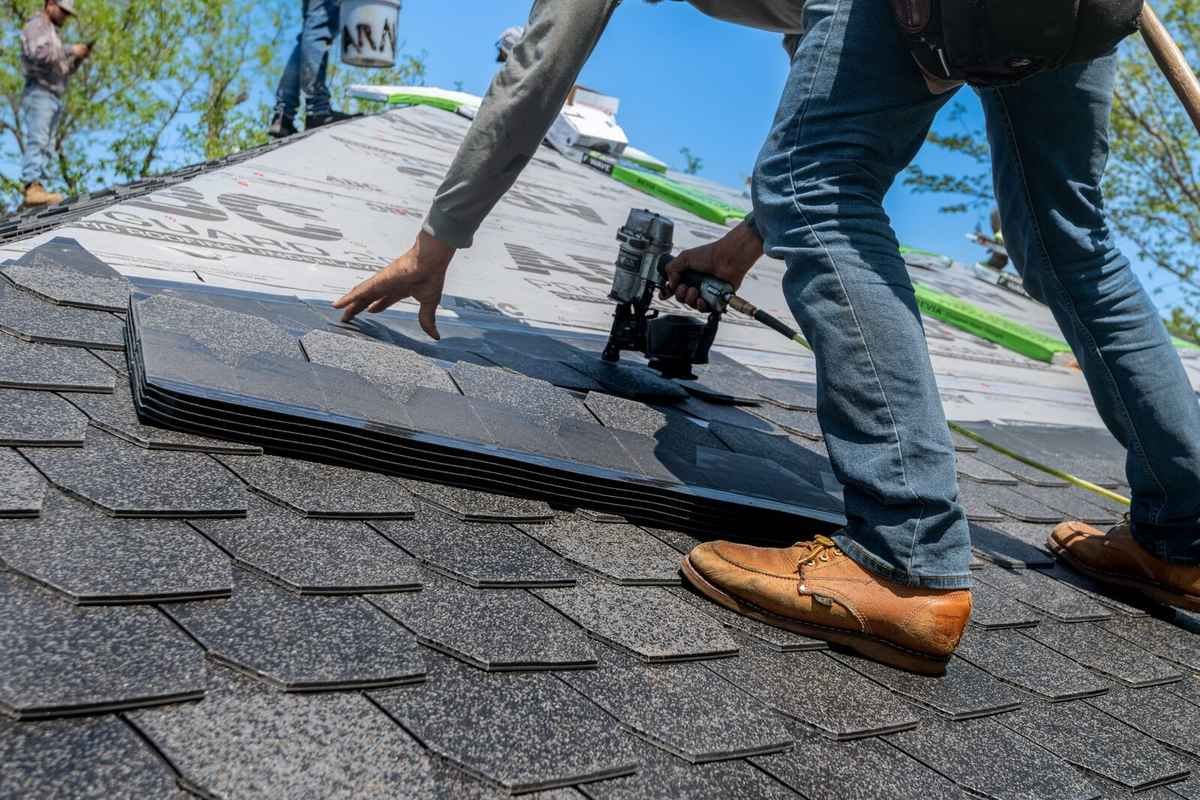
Quick answer: when should a Grand Rapids roof replacement happen?
The reliable installation window for a Grand Rapids roof replacement runs roughly May through early October, when the city’s average daily high stays in the 40–85°F range shingle sealant strips need to bond, ideally near 70°F. Scheduling later risks a replacement racing November’s freeze nights and the December snowpack before the shingles have fully sealed.
Why does temperature matter this much for a roof replacement?
Asphalt shingles use a factory-applied sealant strip that bonds each shingle to the one below it, and that bond needs sustained warmth to activate — industry guidance from the Asphalt Roofing Manufacturers Association puts the reliable range at roughly 40–85°F, ideally near 70°F. Grand Rapids’ own NOAA normals show the city’s average daily high sits in or above that band from about May (70°F average high) through early October (61°F average high). Outside that window, the sealant may not activate fully before winter, leaving individual shingles more vulnerable to wind lift.
The window closes gradually, not suddenly: by November, Grand Rapids averages 16 nights at or below freezing, and even April still averages 10 such nights. A late-fall or winter replacement isn’t impossible, but it’s racing conditions the sealant strip wasn’t designed around.
Why this matters locally
- A late replacement also races Michigan’s mandatory eave ice barrier install
- Shingles here already run 5–10 years shorter than warm-climate roofs
- Permit lead time at the City of Grand Rapids adds to the schedule
- Booking early in the window avoids peak-season contractor backlogs
How should a Grand Rapids homeowner plan a summer or fall replacement?
Six planning steps that make the most of the May-through-early-October window.
Confirm the sealant-window timeline
Talk through scheduling with a licensed roofer early, since the reliable window is only about five months long.
Understand the code-driven scope
A code-compliant Grand Rapids replacement includes the mandatory eave ice barrier — not just new shingles on top of the old scope.
Factor in permit lead time
The City of Grand Rapids requires a permit for every re-roof, even a shingle-only swap, which adds to the overall timeline.
Choose climate-suited materials
Material choice affects how well a roof handles Grand Rapids’ standing snowpack and freeze-thaw cycling for years after installation.
Build in a buffer before November
Aim to finish well before the freeze-night count climbs, so the sealant strip has time to fully activate.
Don’t wait for a winter emergency
A roof that’s already failing shouldn’t wait for “the right season” — but a planned replacement should use the window when there’s a choice.
What do Grand Rapids’ own temperature normals actually show?
The window isn’t a rule of thumb — it’s read directly off 30 years of NOAA station data for Grand Rapids.
The window typically opens in May, when average highs first reach the sealant activation range.
Average early-October high, still within the reliable installation range before it narrows.
Average nights at or below freezing in November, as the window closes for the season.
Average freeze nights still occurring in April, before the window reliably reopens.
Sources: Current Results — Grand Rapids average temperatures by month (NOAA/NCEI); sealant activation range per the Asphalt Roofing Manufacturers Association.
What’s the real difference between replacing in-season and pushing it late?
Both are physically possible — the risk profile is what changes.
Replacing May–early October
- Sealant strips bond fully in the target temperature range
- Buffer time remains before the first hard freeze
- Full flexibility on material and scheduling choices
- Permit and inspection timelines have room to work normally
Pushing into late fall or winter
- Sealant strips may not fully activate before cold sets in
- Individual shingles are more vulnerable to wind lift over winter
- Work competes directly with the Dec–Feb snowpack window
- Fewer scheduling options if the roof needs to go on regardless
What else factors into a Grand Rapids replacement decision?
Timing is one part of the picture — these cover the rest.
Is it time to replace at all?
See how long asphalt shingles actually last in West Michigan’s lake-effect climate before deciding.
What if it can’t wait for summer?
Read roof replacement timelines in a Grand Rapids winter for what an off-season project actually involves.
Repair or replace?
Work through our repair-or-replace decision guide if you’re not yet sure a full replacement is warranted.
Questions Grand Rapids homeowners ask about replacement season
What’s the actual best month to replace a roof in Grand Rapids?+
Anywhere from May through August tends to offer the most temperature stability, since average highs sit comfortably in the shingle sealant activation range. September and early October remain workable, with the window narrowing as average highs drop toward 61°F.
Can a roof be replaced in winter if it can’t wait?+
Yes, it’s done when a roof is actively failing, but it requires extra steps a warm-weather install doesn’t, since sealant strips may need manual sealing to bond in cold temperatures. See our winter timeline guide for what that involves.
Why do sealant strips matter so much?+
The sealant strip is what bonds each shingle to the one below it, resisting wind lift. If it doesn’t fully activate before cold weather sets in, shingles are more vulnerable to being lifted or blown off during winter storms.
Does the eave ice barrier requirement affect replacement timing?+
It affects scope more than timing directly, but a full, code-compliant replacement includes installing the mandatory eave ice-and-water membrane, which is easier to install correctly on a dry, bare deck in warmer weather.
How far in advance should I schedule a summer replacement?+
Earlier is better. The reliable window is only about five months long, and licensed roofers in West Michigan tend to book up fastest in the peak of that window, so early scheduling protects your preferred timing.
Replacement planning help across Grand Rapids & Kent County
We connect homeowners with licensed roofers throughout the Grand Rapids metro and surrounding West Michigan communities.
Continue the seasonal maintenance series
Get matched with a licensed Grand Rapids roofer
Call now and we’ll connect you with a licensed West Michigan roofer to plan a replacement inside the reliable window. No phone tag, no obligation.
Call now for a roofer
Independent dispatch service connecting homeowners with licensed local roofing professionals. We are not a roofing contractor.