How Long Do Asphalt Shingles Last in a West Michigan Lake-Effect Climate?
In Grand Rapids and the wider West Michigan lake-effect belt, asphalt shingle roofs typically last 15–20 years — noticeably short of the 20–25 year range often quoted for milder, drier climates. Grand Rapids Roofing Pros is an independent dispatch service that connects homeowners with licensed local roofers once it’s time to plan a replacement.
Call now for a licensed local roofer
Call now and we’ll connect you by phone with the licensed local roofer you’re matched with — no phone tag, no obligation.
Ready to talk to someone about your roof?
Call to reach the licensed local roofer you’re matched with in Grand Rapids & West Michigan.
Call (901) 704-8932When you call, stay on the line for a few seconds while we match you with the licensed local roofer for your area. Have your address and a quick description of the problem ready.
We connect homeowners with independent licensed roofing professionals in the Grand Rapids area. We are not a licensed contractor and do not perform roofing work ourselves.
Quick answer: 15–20 years for standard shingles, 5–10 years short of a warm-climate roof
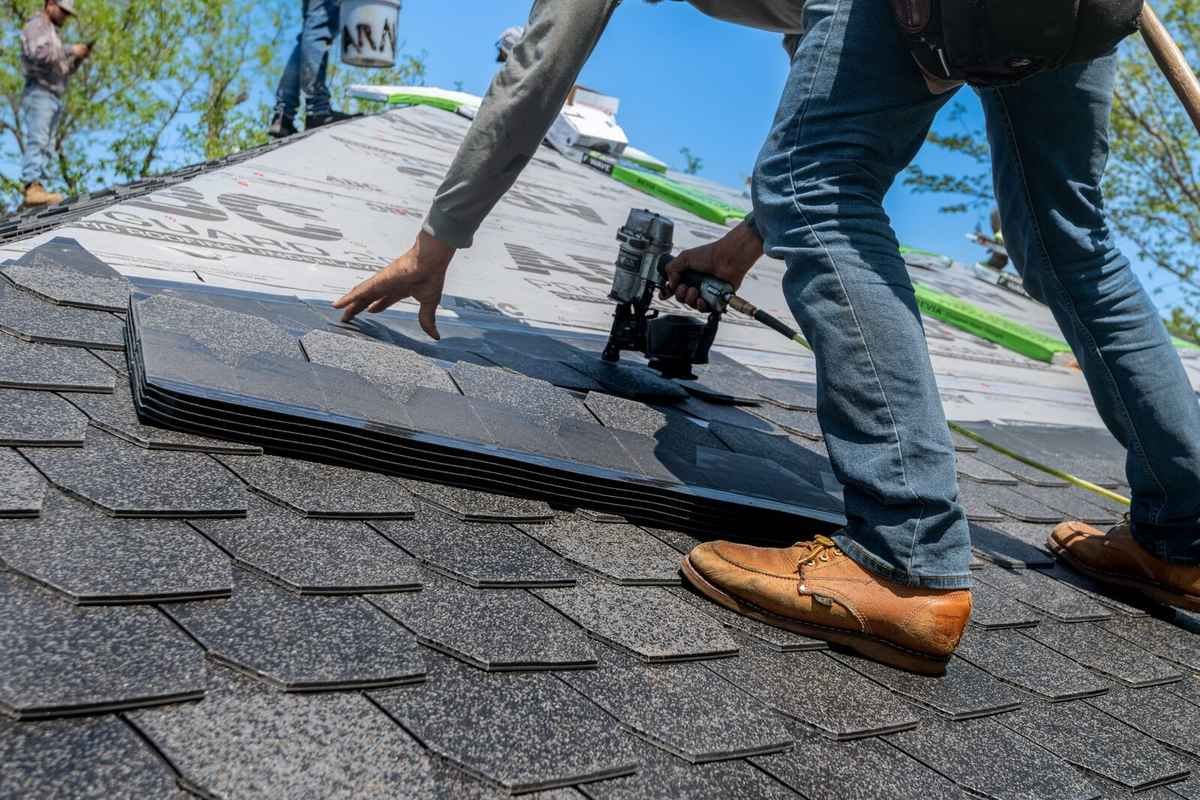
A standard three-tab asphalt shingle roof in the Grand Rapids lake-effect belt typically lasts about 15–20 years, and a thicker architectural shingle can reach roughly 25–30 years with good attic ventilation. That’s consistently shorter than the same products get in warmer, drier regions, with local roofing-industry data putting West Michigan roofs at 5–10 years faster aging. The gap comes from repeated freeze-thaw cycling, the region’s heavy snow load, and ice-dam moisture working under the shingle mat at the eaves each winter.
Freeze-thaw cycling is the primary local degradation driver
Asphalt shingles are a flexible composite — a fiberglass mat coated in asphalt and mineral granules — and flexible composites move with temperature. Every time a Grand Rapids roof crosses the freezing line, the mat expands and contracts slightly. Repeated over dozens of cycles each winter and shoulder season, that movement loosens the mineral granules that shield the shingle from UV light, stresses the self-sealing adhesive strips between courses, and opens hairline cracks that widen with each subsequent cycle. National shingle-lifespan estimates are built around climates that see far fewer of these cycles per year.
The mechanism compounds with the region’s documented snow behavior: because Grand Rapids holds a standing snowpack on roofs for weeks at a time in Dec–Feb, and the freeze-thaw window continues into March and April, the degrading cycle runs far longer here than a single winter storm elsewhere. See our companion guide on how ice dams form on Grand Rapids roofs for the mechanism behind the moisture side of that equation.
Three local degradation factors
- Freeze-thaw cycling — repeated expansion/contraction loosens granules and seal strips
- Standing snow load — weeks-long snowpack (Dec–Feb) adds sustained weight and moisture exposure
- Ice-dam moisture intrusion — meltwater forced under the shingle mat at the eaves each thaw
Typical West Michigan roof lifespans by shingle type
Not every asphalt product ages the same way under lake-effect conditions. Thicker, better-ventilated systems close some of the gap.
Standard 3-tab asphalt
The most common and most affordable option, typically reaching about 15–20 years locally before granule loss and cracking become widespread.
Architectural (dimensional) shingles
A thicker, multi-layer mat resists freeze-thaw stress better and can reach roughly 25–30 years with proper attic ventilation.
Roofs with an eave ice barrier
Michigan code (R905.1.2) requires an ice-and-water membrane at the eaves on new roofs — see our code explainer — which keeps ice-dam moisture from shortening the shingle’s effective life from underneath.
What West Michigan’s climate actually costs a shingle roof in years
These figures come from Grand Rapids-area roofing-industry data and NOAA climate normals — not a manufacturer’s best-case warranty number.
Typical West Michigan lifespan for a standard 3-tab asphalt shingle roof, per regional roofing-industry data.
Typical lifespan for a thicker architectural shingle roof with proper attic ventilation.
How much sooner the same shingle product tends to wear out here than in a warmer, drier climate.
Average annual snowfall at Gerald R. Ford International Airport (NOAA climate normals, 1991–2020).
Sources: GAF — How Long Does a Roof Last (Grand Rapids-area roofing company); GAF — How the Freeze-Thaw Cycle Can Affect Your Roof; snow data per Current Results (NOAA/NCEI Climate Normals, GRR).
Four things that stretch a West Michigan shingle roof’s lifespan
None of these stop freeze-thaw cycling, but each one reduces how much damage each cycle does.
Soffit-to-ridge ventilation
Balanced attic airflow keeps the roof deck closer to outdoor temperature, reducing the melt-refreeze cycling that stresses shingles from below.
Confirmed eave ice barrier
An ice-and-water membrane at the eaves, required by Michigan code on new roofs, keeps ice-dam meltwater from working under the shingle mat.
Clear gutters before winter
Clogged gutters hold water against the eave edge, adding freeze-thaw stress exactly where the roof is already most vulnerable.
Annual fall inspection
Catching granule loss or early cracking before a winter of freeze-thaw cycling runs across it is what keeps a roof at the high end of its expected range.
Questions West Michigan homeowners ask
Why do asphalt shingles last fewer years in Grand Rapids than the manufacturer’s warranty suggests?+
Manufacturer warranty terms are typically based on best-case, moderate-climate conditions. Grand Rapids’ freeze-thaw cycling, sustained snow load, and ice-dam moisture intrusion are more aggressive than that baseline, which is why regional roofing-industry data puts actual local lifespans several years below the warranty ceiling.
Do architectural shingles really last that much longer than 3-tab shingles here?+
Generally yes. The thicker, multi-layer construction of architectural shingles resists the expansion-and-contraction stress of freeze-thaw cycling better than a standard 3-tab shingle, which is why they tend to reach the upper end of the local lifespan range.
Does better attic ventilation actually extend shingle life, or is that a myth?+
It’s a real factor. Ventilation keeps the roof deck closer to outdoor temperature, which reduces the melt-refreeze cycling that drives ice dams and the moisture intrusion that shortens a shingle’s effective life from underneath.
How do I know if my roof is nearing the end of its expected lifespan?+
Watch for the wear signals covered in our signs-you-need-a-new-roof guide — curling edges, granule loss, and recurring leaks — especially once the roof is approaching 15–20 years old.
Is metal roofing a way to avoid this lake-effect degradation entirely?+
Metal roofing sheds snow and resists freeze-thaw stress differently than asphalt and can last several decades in this climate, but it’s a different material and installation decision. A licensed local roofer can walk through the trade-offs for your specific roof.
Roof replacement help across Grand Rapids & Kent County
We connect homeowners with licensed roofers throughout the Grand Rapids metro and surrounding West Michigan communities.
Continue the replacement series
Get matched with a licensed Grand Rapids roofer
Call now and we’ll connect you with a licensed West Michigan roofer for an age-and-condition assessment. No phone tag, no obligation.
Call now for a roofer
Independent dispatch service connecting homeowners with licensed local roofing professionals. We are not a roofing contractor.