Signs Your Roof Needs Replacing in West Michigan
West Michigan homeowners rarely get one dramatic warning — they get a slow build-up of freeze-thaw wear across a few winters. Grand Rapids Roofing Pros is an independent dispatch service that connects West Michigan homeowners with licensed local roofers for an on-site assessment.
Call now for a licensed local roofer
Call now and we’ll connect you by phone with the licensed local roofer you’re matched with — no phone tag, no obligation.
Ready to talk to someone about your roof?
Call to reach the licensed local roofer you’re matched with in Grand Rapids & West Michigan.
Call (901) 704-8932When you call, stay on the line for a few seconds while we match you with the licensed local roofer for your area. Have your address and a quick description of the problem ready.
We connect homeowners with independent licensed roofing professionals in the Grand Rapids area. We are not a licensed contractor and do not perform roofing work ourselves.
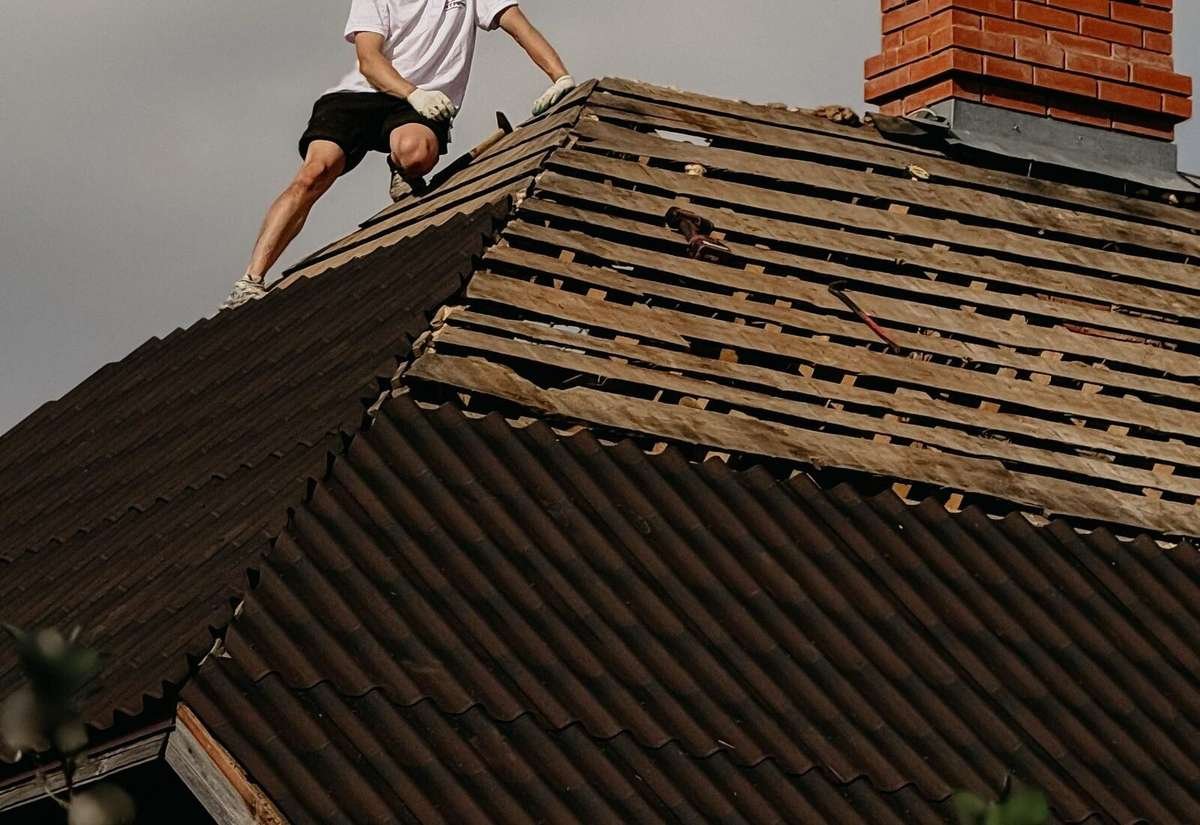
Quick answer: the top signs a West Michigan roof needs replacing
The clearest signs a Grand Rapids-area roof needs replacing rather than another repair are curling, cracked, or missing shingles; heavy granule loss collecting in the gutters; recurring leaks or ice dams at the same section every winter; visible sagging along the roof deck; and daylight, frost, or dampness visible on the roof boards from inside the attic. Two or more of these together, especially lining up with West Michigan’s freeze-thaw swings each spring, usually mean the roofing system has reached the end of its service life.
West Michigan’s freeze-thaw whipsaw accelerates wear
Grand Rapids’ snow tapers from an average of 7.6 inches in March to about 2.0 inches in April, but the temperature doesn’t taper with it — the region swings repeatedly above and below freezing through that whole stretch. Each cycle expands and contracts the shingle mat and any water that has worked into a seam, seal strip, or nail hole. Over a few winters, that repeated movement is what turns a small, isolated flashing gap into a recurring leak, and what loosens the granules that protect a shingle from UV and moisture in the first place.
A roof already carrying the flashing and nail-pop damage that freeze-thaw cycling causes rarely shows up as one dramatic failure. See our roof repair overview for how that damage typically presents, and our shingle lifespan guide for how many years these cycles tend to take off a West Michigan roof.
Quick self-check from the ground
- Shingle edges curling up or clawing instead of lying flat
- Dark, sandy granules collecting in gutters or downspouts
- A leak that reappears at the same spot every winter
- A roofline that looks slightly wavy or sagging between rafters
Six signs it’s replacement, not another repair
Each of these can happen on its own from ordinary wear. Two or more together, tracking with West Michigan’s freeze-thaw seasons, is the pattern that points to full replacement.
Curling or clawing shingle edges
Repeated freeze-thaw movement stiffens the shingle mat, and edges that no longer lie flat let wind and water underneath.
Heavy granule loss
Sandy, dark granules building up in gutters or at downspouts mean the shingle’s protective surface layer is wearing away faster than it should.
Cracking on south- and west-facing slopes
UV exposure combined with freeze-thaw cycling concentrates cracking on the slopes that see the most sun and the widest temperature swings.
Recurring leaks at the same valley or eave
A leak that returns every winter at the same spot usually means the underlying membrane or flashing has failed, not just the visible shingle above it.
Visible roof deck sagging
A wavy or dipping roofline between rafters points to moisture-weakened decking underneath — a structural sign, not a cosmetic one.
Daylight or frost in the attic
Light coming through the roof boards, or frost and dampness on their underside on a cold morning, both indicate the roof deck is no longer sealing properly.
Why West Michigan’s shoulder seasons wear a roof down faster
It isn’t just snow load. It’s how many times a Grand Rapids roof crosses the freezing line every spring and fall while carrying moisture from the winter before.
Average March snowfall at Gerald R. Ford International Airport (NOAA climate normals, 1991–2020) — the start of the freeze-thaw whipsaw.
Snowfall tapers fast, but the above/below-freezing swings that stress a worn roof continue through April.
Typical asphalt shingle lifespan for West Michigan homes, per regional roofing-industry data.
How much sooner Michigan roofs tend to wear out than the same shingle in a warmer, drier climate.
Sources: Current Results — Grand Rapids monthly snowfall (NOAA/NCEI Climate Normals, GRR); shingle-lifespan figures per GAF — How Long Does a Roof Last, a Grand Rapids-area roofing company.
Repair or replace? What the signs mean
Not every sign on this page means a full tear-off. Here’s the rough split a licensed roofer uses during an on-site assessment.
Signs pointing to replacement
- Curling or cracking spread across multiple slopes, not one section
- Leaks at more than one location, or the same spot every winter
- Visible sagging or soft spots in the roof deck
- Roof is 18–20+ years old with no documented eave ice barrier
Signs a repair may still be enough
- One isolated leak tied to a specific flashing or vent boot
- A small number of damaged or missing shingles in one area
- Minor granule loss with no cracking or curling visible
- Roof is under roughly 10 years old with no structural signs
For the full decision framework, see our repair-vs-replacement guide, or get matched with a licensed roofer for a code-compliant replacement assessment if your signs land in the left column.
Questions West Michigan homeowners ask
How many of these signs mean I need a full replacement, not a repair?+
One sign on its own is often repairable. Two or more together — especially spread across multiple roof slopes or paired with deck sagging — is the pattern that usually points to full replacement rather than another patch.
Does granule loss in the gutters always mean the roof needs replacing?+
Not always. Some granule loss is normal in the first year or two after installation. Heavy, ongoing accumulation combined with visible curling or cracking is what signals the shingle’s protective surface is failing, not just settling.
Can freeze-thaw damage show up on a roof that isn’t that old?+
Yes, particularly if the original installation skipped proper flashing detail or ventilation. Freeze-thaw stress accelerates whatever weak point already exists, so a poorly detailed roof can show wear well before its expected lifespan.
Is a sagging roof deck always a replacement situation?+
Visible sagging almost always means the deck itself has absorbed moisture and weakened, which is a structural issue rather than a surface one. A licensed roofer typically treats this as a replacement-level finding during an on-site assessment.
Should I wait until spring to address these signs, or get an assessment now?+
Freeze-thaw damage tends to worsen with each cycle, so a roof already showing two or more of these signs is generally worth a professional look before the next thaw, not after it.
Roof replacement help across Grand Rapids & Kent County
We connect homeowners with licensed roofers throughout the Grand Rapids metro and surrounding West Michigan communities.
Continue the replacement series
Get matched with a licensed Grand Rapids roofer
Call now and we’ll connect you with a licensed West Michigan roofer for an on-site repair-or-replace assessment. No phone tag, no obligation.
Call now for a roofer
Independent dispatch service connecting homeowners with licensed local roofing professionals. We are not a roofing contractor.