A New Homeowner’s Guide to Your First Grand Rapids Winter Roof
If this is your first winter owning a home in Grand Rapids, your roof is about to deal with something most of the country doesn’t: a multi-week standing snowpack that drives a recurring winter phenomenon called an ice dam. Grand Rapids Roofing Pros is an independent dispatch service that connects homeowners with licensed local roofers for inspections; we do not perform roofing work ourselves.
Call now for a licensed local roofer
Call now and we’ll connect you by phone with the licensed local roofer you’re matched with — no phone tag, no obligation.
Ready to talk to someone about your roof?
Call to reach the licensed local roofer you’re matched with in Grand Rapids & West Michigan.
Call (901) 704-8932When you call, stay on the line for a few seconds while we match you with the licensed local roofer for your area. Have your address and a quick description of the problem ready.
We connect homeowners with independent licensed roofing professionals in the Grand Rapids area. We are not a licensed contractor and do not perform roofing work ourselves.
Quick answer: what a new Grand Rapids homeowner should know before winter
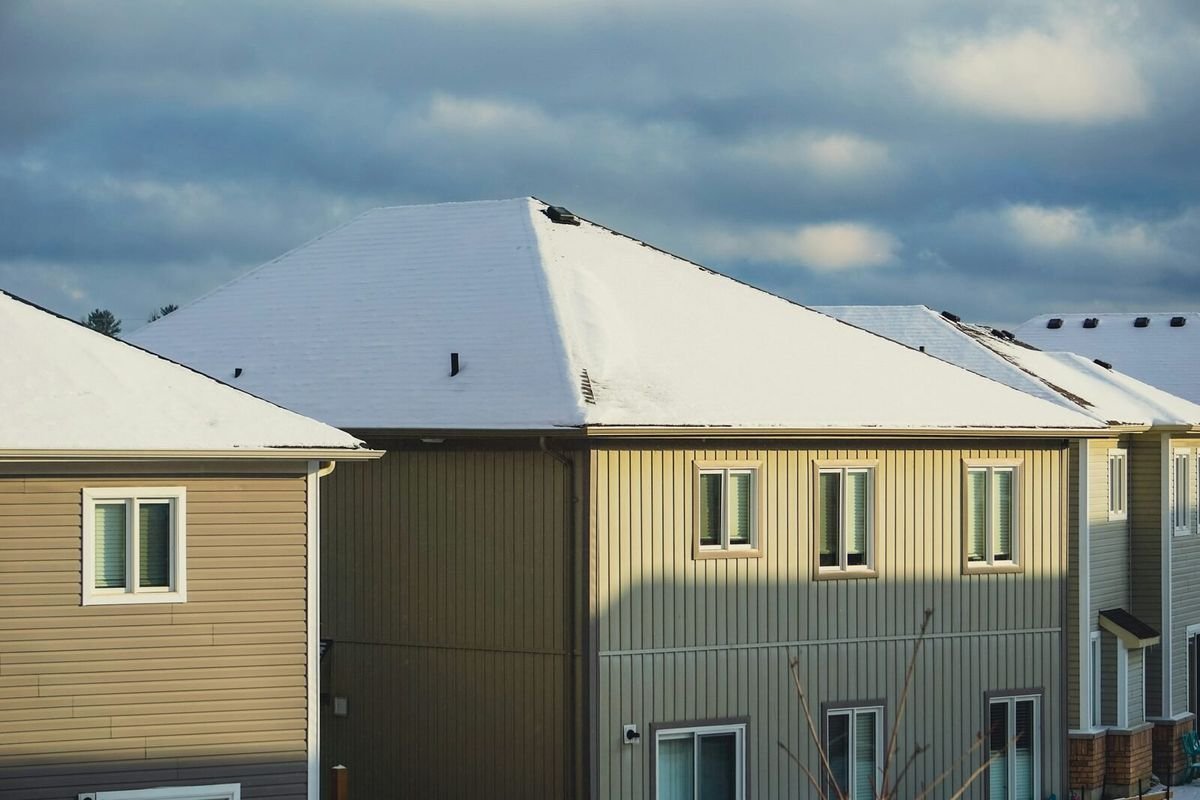
Expect real, sustained snow — Grand Rapids averages 77.6 inches a year, most of it falling December through February, with a standing snowpack of 5 inches or more about 28.7 days a year. That drives ice dams: warm air leaking into an under-insulated attic melts the snowpack from underneath, the meltwater refreezes at the cold eave, then later meltwater backs up under the shingles. A fall inspection before the first hard freeze, checking attic insulation and ventilation, is the single most useful thing a new owner can do.
Is Grand Rapids really snowier than people expect?
Often, yes — and the trend is moving the wrong direction for anyone hoping it’s a mild-winter exception. Roughly 60″+ of the metro’s annual snowfall falls in December, January, and February alone, and Grand Rapids’ seasonal snowfall rose from 70.9 inches (1961–1990) to 76.9 inches (1991–2020), with the January–February average up about 6 inches, even as the immediate lakeshore (Muskegon) saw its snowfall fall 26% over the same period. As Lake Michigan freezes later in the season, lake-effect snow bands are shifting farther inland — toward Grand Rapids, not away from it.
For the mechanism your roof will actually deal with, see our flagship guide on how ice dams form in West Michigan.
First-winter checklist for new owners
- Get a fall, attic-inclusive inspection before the first hard freeze
- Ask about insulation depth & ventilation, not just shingle condition
- Confirm whether the eave ice barrier (required by Michigan code) is present
- Learn what normal winter roof snow looks like versus a concerning sign
- Know who to call if an ice ridge or ceiling stain shows up
What’s normal winter snow, and what isn’t?
Most snow sitting on a Grand Rapids roof in January is completely normal. These are the signals worth a second look.
Worth a licensed look
- An ice ridge or icicle wall building at the eaves
- New staining on an interior ceiling near an exterior wall
- Uneven melt patterns across the roof surface
- Visible sagging anywhere on the roofline
Usually just West Michigan winter
- An even blanket of snow across the whole roof
- Small icicles with no interior staining
- Snow that gradually slides off as temperatures rise
- Frost or light rime that burns off by midday
What does a typical West Michigan winter actually put on a roof?
These are the specific, sourced figures behind the “it’s snowier than I expected” feeling many new owners have their first year.
NOAA/NCEI climate normal (1991–2020), Gerald R. Ford International Airport.
The three peak months carry the large majority of the annual total.
The condition an ice dam actually needs — not a single storm, weeks of pack.
Increase since 1961–1990 normals, as lake-effect bands shift inland.
Sources: NOAA/NCEI Climate Normals, Gerald R. Ford International Airport (1991–2020); WZZM 13, “Shifting snow,” citing National Climate Assessment / Midwest Historical Climate data.
Questions first-year Grand Rapids owners ask
Is Grand Rapids really snowier than most new homeowners expect?+
Often, yes. Grand Rapids averages 77.6 inches of snow a year, and the peak December–February window has actually gotten snowier since the 1961–1990 normals, as Lake Michigan’s lake-effect snow band shifts farther inland.
What is an ice dam, and will my roof get one?+
An ice dam forms when warm air leaking into an under-insulated or under-ventilated attic melts the underside of a standing snowpack; that meltwater refreezes at the cold eave and can back later meltwater up under the shingles. Whether it happens to your specific roof depends heavily on attic insulation and ventilation condition, which is exactly what a fall inspection checks.
Should I get my roof inspected before my first winter here?+
A fall, attic-inclusive inspection before the first hard freeze is one of the most useful things a new owner can do, since insulation depth, ventilation, and eave ice-barrier presence are exactly the variables that determine ice-dam risk, and a new owner often doesn’t know that history yet.
What’s normal winter roof snow versus something to worry about?+
An even blanket of snow with small icicles and no interior staining is normal. An active ice ridge, new ceiling staining, uneven melt patterns, or any visible sagging are worth a licensed look.
Does Grand Rapids Roofing Pros perform roof inspections directly?+
We are an independent dispatch service. We connect new and existing homeowners with licensed local roofers who perform inspections directly; we do not perform roofing work ourselves.
First-winter roof help across Grand Rapids & West Michigan
Part of the broader West Michigan roofing resource from Grand Rapids Roofing Pros.
Continue the seasonal series
Get matched with a licensed West Michigan roofer
Call now and we’ll connect you with a licensed local roofer for a no-obligation first-winter roof inspection.
Call now for a roofer
Independent dispatch service connecting homeowners with licensed local roofing professionals. We are not a roofing contractor.