Roof-Over vs. Tear-Off in Grand Rapids, MI
Roof-over vs. tear-off in Grand Rapids isn’t primarily a budget question — it’s a code question with a hard number attached. Grand Rapids Roofing Pros is an independent dispatch service connecting homeowners with licensed local roofers who can count your existing layers before you decide.
Call now for a licensed local roofer
Call now and we’ll connect you by phone with the licensed local roofer you’re matched with — no phone tag, no obligation.
Ready to talk to someone about your roof?
Call to reach the licensed local roofer you’re matched with in Grand Rapids & West Michigan.
Call (901) 704-8932When you call, stay on the line for a few seconds while we match you with the licensed local roofer for your area. Have your address and a quick description of the problem ready.
We connect homeowners with independent licensed roofing professionals in the Grand Rapids area. We are not a licensed contractor and do not perform roofing work ourselves.
Quick answer: can you roof over in Grand Rapids?
Quick answer: Sometimes. Michigan’s residential code (IRC R908.3.1.1) allows a roof recover — installing new shingles over one existing layer — but bars it outright once a roof already has two or more layers of roofing material. The City of Grand Rapids’ Development Center permit guidance independently confirms the same two-layer limit for local permit applicants. If your roof already has two layers, a full tear-off is the only code-compliant path to a legal Grand Rapids re-roof permit, regardless of preference or budget.
Why Grand Rapids caps recovers at two layers
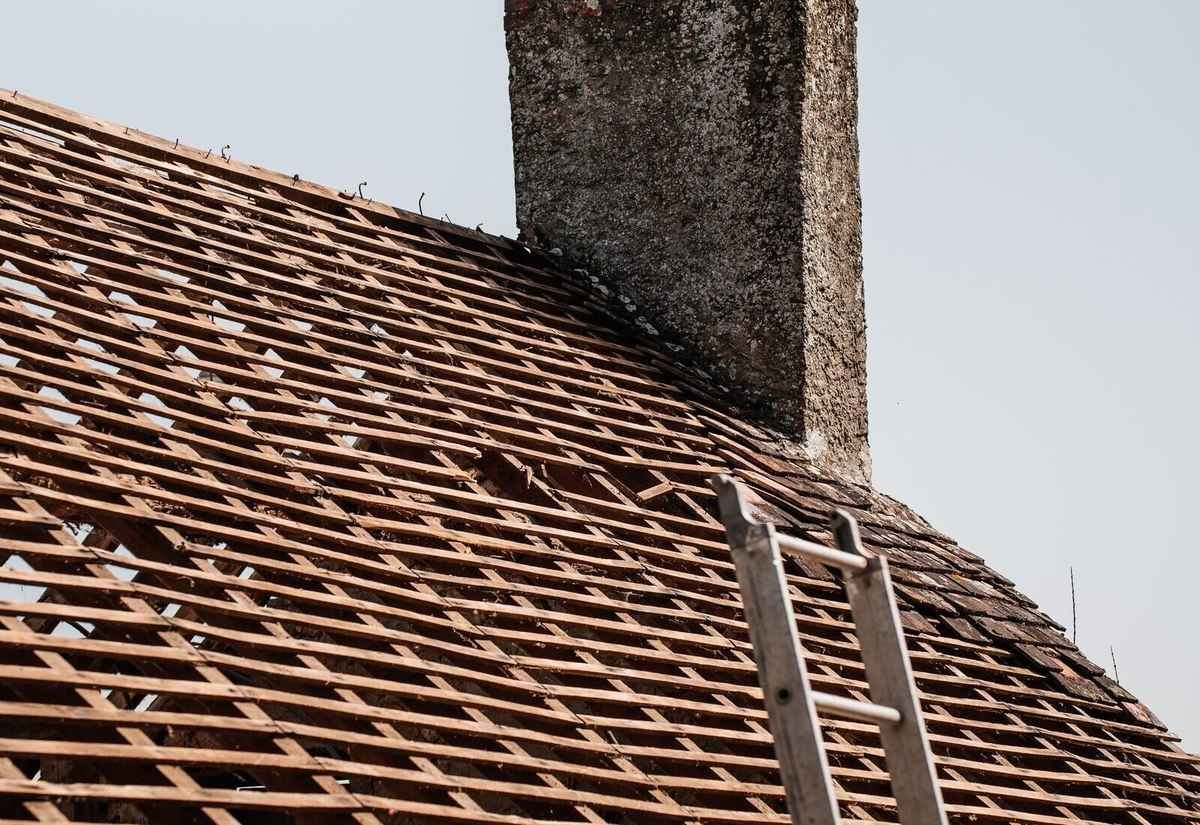
A roof recover leaves the old shingles in place and fastens a new layer directly on top — faster and less disruptive than a full tear-off, but it’s still governed by the same statewide code that applies to every Grand Rapids re-roof (see our permit process guide). IRC R908.3.1.1 caps a recover at whatever gets a roof to two layers total; once a third layer would be added, the code requires a tear-off instead, no exceptions for preference or price.
That cap exists because piling on more layers adds weight the original framing wasn’t necessarily designed to hold, and it makes it impossible to inspect or repair the deck and any ice-barrier membrane underneath. For a Grand Rapids roof, that ice barrier isn’t optional — Michigan’s R905.1.2 requires an eave ice-and-water membrane on every re-roof, and a recover, by definition, can’t install that membrane at the deck if it isn’t already there.
What a roof-over can’t fix
- It can’t add or repair the code-required eave ice barrier if the original roof never had one.
- It can’t reveal rotted decking underneath — the hidden-damage risk covered in our supplemental insurance claim guide.
- It doesn’t reset the clock on ventilation problems already built into the old roof.
Roof-Over vs. Tear-Off
Two legal options where the code allows a recover — with real tradeoffs once you’re past the layer count. We don’t quote installed pricing here, since costs vary by roof size and scope.
Roof-Over (Recover)
The faster, lower-disruption option
- Faster turnaround, less debris and disposal
- Lower labor scope since the old layer stays in place
- A legal option in Grand Rapids when the roof has one existing layer
- Not permitted once a roof already has two layers, per IRC R908.3.1.1
- Can’t add a missing eave ice barrier at the deck
- Hides, rather than reveals, decking condition underneath
Tear-Off
The code-required option past two layers
- The only option once a roof already carries two layers
- Exposes the deck, so hidden rot or a missing ice barrier can be found and fixed
- Lets a licensed roofer install the current code-required ice barrier correctly
- More labor, debris removal, and disruption
- Takes longer than a straightforward recover
- A larger labor scope than a recover, independent of material choice
Questions to weigh before you decide
- How many layers does your current roof already have? Only a licensed roofer, or City of Grand Rapids permit records, can confirm this accurately.
- Do you know whether your roof already has the code-required eave ice barrier? A recover can’t add one if it’s missing.
- Any history of ceiling staining or ice-dam backup? That’s a reason to want the deck exposed, not covered over.
- Are you planning to sell soon? Buyers and inspectors routinely ask how many roofing layers a home has — see our pre-listing roof checklist.
Roof-over vs. tear-off in Grand Rapids isn’t really a preference decision — it’s a layer count. If your roof is down to one layer with no hidden ice-barrier or decking concerns, a code-compliant recover is a legitimate, faster option. Once you’re at two layers, Michigan’s code and the City of Grand Rapids’ own permit rule both require a tear-off. A licensed roofer can count your layers and confirm which path your specific roof and permit require.
Questions Grand Rapids homeowners ask
How many roofing layers am I allowed to have in Grand Rapids?+
Under IRC Section R908.3.1.1, adopted into the Michigan Residential Code, a roof can carry at most two layers of roof covering. A third layer is not permitted as a recover — a full tear-off is required instead, a limit the City of Grand Rapids’ own permit guidance confirms for local applicants.
How do I find out how many layers my roof has?+
A licensed roofer can typically confirm the layer count during an inspection, and City of Grand Rapids permit records may show the history of past re-roof permits on a given address.
Does a roof-over still need a permit in Grand Rapids?+
Yes. The City of Grand Rapids requires a residential building permit for any re-roofing work, including a recover, not just a full tear-off — covered in more detail in our roof replacement permit guide.
Can a roof-over include the ice barrier Michigan code requires?+
Only if that ice barrier is already correctly installed at the deck from a prior re-roof. A recover leaves the existing layer in place, so it cannot add a membrane that isn’t already there — only a tear-off exposes the deck enough to install or correct it.
Is a tear-off always more expensive than a roof-over?+
Tear-off involves more labor and debris removal, but exact scope depends on your roof’s size and condition — a licensed roofer can walk your specific roof rather than guessing from a general rule.
Go deeper on replacement
Where we match roofers
Get a licensed roofer’s layer count and permit read
Call now and we’ll connect you with a licensed West Michigan roofer who can count your roof’s layers and confirm what your permit requires. No phone tag, no obligation.
Call now for a roofer
Independent dispatch service connecting homeowners with licensed local roofing professionals. We are not a roofing contractor.