How Ice Dams Form on Grand Rapids Roofs
Ice dams form on Grand Rapids roofs through a specific, repeatable mechanism: heat leaking into an under-insulated attic melts the underside of a standing West Michigan snowpack, the meltwater runs down to the cold eave overhang, and it refreezes into a ridge of ice that backs water up under the shingles. Grand Rapids Roofing Pros is an independent dispatch service that connects West Michigan homeowners with licensed local roofers once a dam has formed, but understanding the mechanism is what actually prevents the next one.
Call now for a licensed local roofer
Call now and we’ll connect you by phone with the licensed local roofer you’re matched with — no phone tag, no obligation.
Ready to talk to someone about your roof?
Call to reach the licensed local roofer you’re matched with in Grand Rapids & West Michigan.
Call (901) 704-8932When you call, stay on the line for a few seconds while we match you with the licensed local roofer for your area. Have your address and a quick description of the problem ready.
We connect homeowners with independent licensed roofing professionals in the Grand Rapids area. We are not a licensed contractor and do not perform roofing work ourselves.
The short answer: it’s a warm-attic problem, not just a snow problem
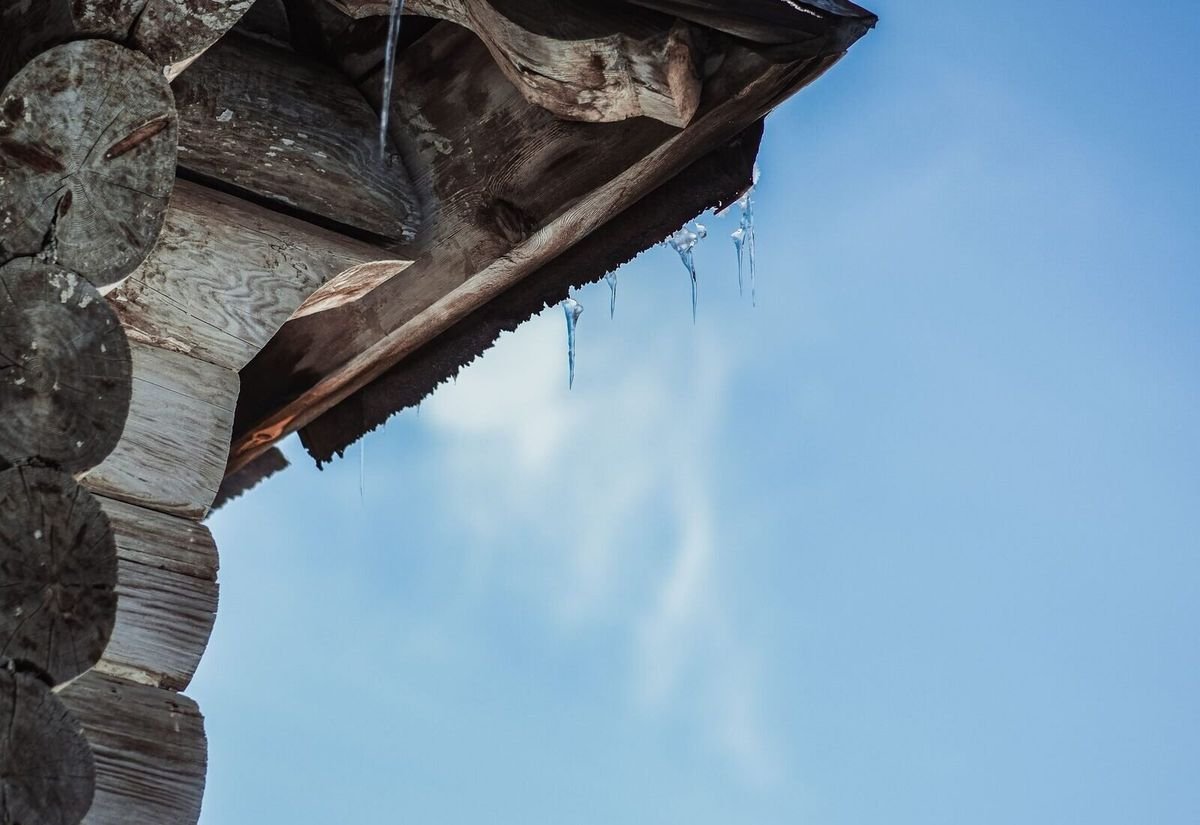
An ice dam forms when heat escaping into the attic warms the roof deck and melts snow above it. Meltwater runs to the cold eave overhang and refreezes into a ridge that traps water and forces it up under the shingles. The trigger is attic heat loss; a Grand Rapids roof holds that snowpack for weeks at a time. A licensed local roofer addresses the cause, not just the leak.
Attic heat has specific sources — and they’re fixable
Warm air does not need a big gap to escape into an attic; small, continuous leaks do most of the damage over a winter. The usual sources are bathroom and kitchen exhaust fans that vent into the attic instead of outside, recessed “can” lights without airtight housings, an unsealed attic hatch or pull-down stair, gaps around plumbing and electrical penetrations, and ductwork that runs through the attic uninsulated. Each one adds a small stream of house-temperature air into a space that is supposed to stay at outdoor temperature.
Insulation depth matters too, but air-sealing usually matters more: a few square inches of open gap can move more heat than several inches of missing insulation, because moving air carries heat far faster than it conducts through a solid material.
How one Grand Rapids winter night becomes a roof leak
The same sequence repeats on West Michigan roofs, night after night, for as long as the attic stays warm and the snowpack stays put.
Heat escapes into the attic
Air leaks and thin insulation let house-temperature air rise into the attic space instead of staying below the ceiling.
Snow melts from below
That warm air raises the roof deck a few degrees above freezing, melting the underside of the snow sitting on it — invisible from outside.
Meltwater refreezes at the eave
Water runs down to the overhang, which stays at outdoor temperature because it isn’t over heated living space, and freezes into a ridge.
Trapped water backs up
Each new cycle adds water behind the ridge until it is forced uphill, under the shingles, and into the attic or ceiling below.
Why the cycle repeats for weeks in Grand Rapids, not hours
Ice dams need a snowpack that sticks around. Grand Rapids doesn’t just get snow — it holds a standing pack through the exact months attic heat is working hardest against it.
Average annual snowfall at Gerald R. Ford International Airport (NOAA climate normals, 1991–2020).
Falls in December (20.8″), January (22.6″) and February (17.2″) — the exact ice-dam window.
Average days per year with 5 inches or more of snow depth on the ground, mostly in January–February.
Average days per year with a 10-inch-plus standing pack — the raw material a dam needs to keep growing.
It is the standing snow cover, not a single storm’s total, that matters most: heat leaking into the attic melts the underside of that pack for days at a stretch, not just during the storm itself. Sources: Current Results — Grand Rapids snowfall and snow-depth data (NOAA/NCEI Climate Normals, GRR).
Signs the cycle is already running on your roof
Because the melt-refreeze cycle happens on the roof deck under the snow, most homeowners never see it start — they see the downstream evidence instead. Watch for a thickening ridge of ice and icicles along the eaves and gutters after a multi-day cold stretch, water staining on upper-floor ceilings that appears during or right after a thaw and then seems to pause, and frost or dampness on the underside of the roof deck when you look into the attic on a cold morning. Any one of these on its own is worth a look; two or more together strongly suggest an active ice dam rather than ordinary winter wear.
Read more on distinguishing an ice dam from other causes of a leak in our ice dam vs. shingle failure diagnosis guide, and see the full ice dam removal service overview for what happens once one is confirmed.
Quick self-check
- Ice ridge or icicles building up along the eaves, not just gutters
- Ceiling or wall stains near upper-floor exterior walls
- Staining that gets worse during a thaw, then stalls when it refreezes
- Shingles that look undamaged from the ground despite the leak
What actually stops ice dams from forming
Because the root cause is heat loss rather than the ice itself, the fix is an attic-and-eave project, not a once-a-winter chipping job.
Air-seal and insulate the attic floor
Closing the gaps that let warm air rise — around light fixtures, the attic hatch, and plumbing chases — keeps the roof deck at outdoor temperature so there’s nothing to melt the snowpack from below.
Ventilate soffit-to-ridge
Balanced intake and exhaust airflow flushes out any heat that does escape before it can warm the deck. See our full attic ventilation guide for how soffit and ridge vents work together.
Confirm eave ice-barrier coverage
Michigan code requires an ice-and-water membrane at the eaves of every new roof. Many older Grand Rapids homes predate that requirement — see what the code actually requires.
Ready to get ahead of the season? Work through our fall ice dam prevention checklist before the December snowpack sets in.
Questions West Michigan homeowners ask
Do ice dams only form during heavy snowstorms?+
No. A single storm’s total matters less than whether the snow it drops sticks around. Grand Rapids averages nearly 29 days a year with 5 inches or more of snow on the ground, mostly in January and February — that standing pack, not the storm itself, is what an ice dam feeds on over days and weeks of attic heat loss.
Can a well-insulated attic still get ice dams?+
Yes, if there are still air leaks, warm ductwork routed through the attic, or roof valleys and dormers where snow and ice naturally concentrate. Insulation depth helps, but sealing the air leaks that let warm air rise is usually the bigger factor.
Is a thick ice ridge at my eaves always an ice dam?+
Some icicles are normal in a Michigan winter. It becomes an active ice dam when that ridge is paired with a warm attic and repeated refreeze cycles — especially if you’re also seeing ceiling or wall staining on upper floors during a thaw.
Does more snowfall automatically mean more ice dams in Grand Rapids?+
Persistent snow cover matters more than any single storm’s total. It’s also worth noting Grand Rapids’ mid-winter snowfall has trended upward over the past generation as lake-effect bands shift farther inland, which keeps the standing-pack window that feeds ice dams intact rather than shrinking.
What should I check first if I suspect an ice dam is forming?+
Look at the eaves from the ground for a thickening ice ridge, and check upper-floor ceilings near exterior walls for new staining after a thaw. If you can safely access the attic, feel for warm spots or frost on the underside of the roof deck — both point to the warm-attic mechanism already in motion.
Ice dam help across Grand Rapids & Kent County
We connect homeowners with licensed roofers throughout the Grand Rapids metro and surrounding West Michigan communities.
Continue the ice dam series
Get matched with a licensed Grand Rapids roofer
Call now and we’ll connect you with a licensed West Michigan roofer for ice dam removal and an attic-side diagnosis. No phone tag, no obligation.
Call now for a roofer
Independent dispatch service connecting homeowners with licensed local roofing professionals. We are not a roofing contractor.