Ice Dam or Shingle Failure? Diagnosing a Ceiling Stain After Snow in Grand Rapids
A ceiling stain after snow in Grand Rapids has two likely causes — an ice dam backing water up under otherwise-sound shingles, or an actual shingle failure — and the right fix is different for each. Grand Rapids Roofing Pros is an independent dispatch service that connects West Michigan homeowners with licensed local roofers who can confirm which one you’re dealing with.
Call now for a licensed local roofer
Call now and we’ll connect you by phone with the licensed local roofer you’re matched with — no phone tag, no obligation.
Ready to talk to someone about your roof?
Call to reach the licensed local roofer you’re matched with in Grand Rapids & West Michigan.
Call (901) 704-8932When you call, stay on the line for a few seconds while we match you with the licensed local roofer for your area. Have your address and a quick description of the problem ready.
We connect homeowners with independent licensed roofing professionals in the Grand Rapids area. We are not a licensed contractor and do not perform roofing work ourselves.
Ice dam or shingle failure? The quick rule of thumb
A Grand Rapids ceiling stain that appears during a thaw, sits near an exterior wall, and pauses when temperatures drop points to an ice dam backing water under intact shingles. A stain that shows up regardless of freeze-thaw timing or tracks to visible storm damage points to a shingle or flashing failure instead. Either way, a licensed local roofer can confirm which one you have.
Why West Michigan winter leaks usually trace to one of two things
In Grand Rapids, an upper-floor ceiling stain appearing between January and March frequently traces to ice-dam backup at the eaves rather than a failed shingle field — meltwater is forced under otherwise-sound shingles by an eave ice ridge. Diagnosis should start at the eaves, valleys, and attic, not with a shingle patch, because a cosmetic ceiling repair without addressing the eave and attic will typically recur at the next thaw.
Signs it’s an ice dam
- Stain appears during or right after a thaw, and pauses when it refreezes.
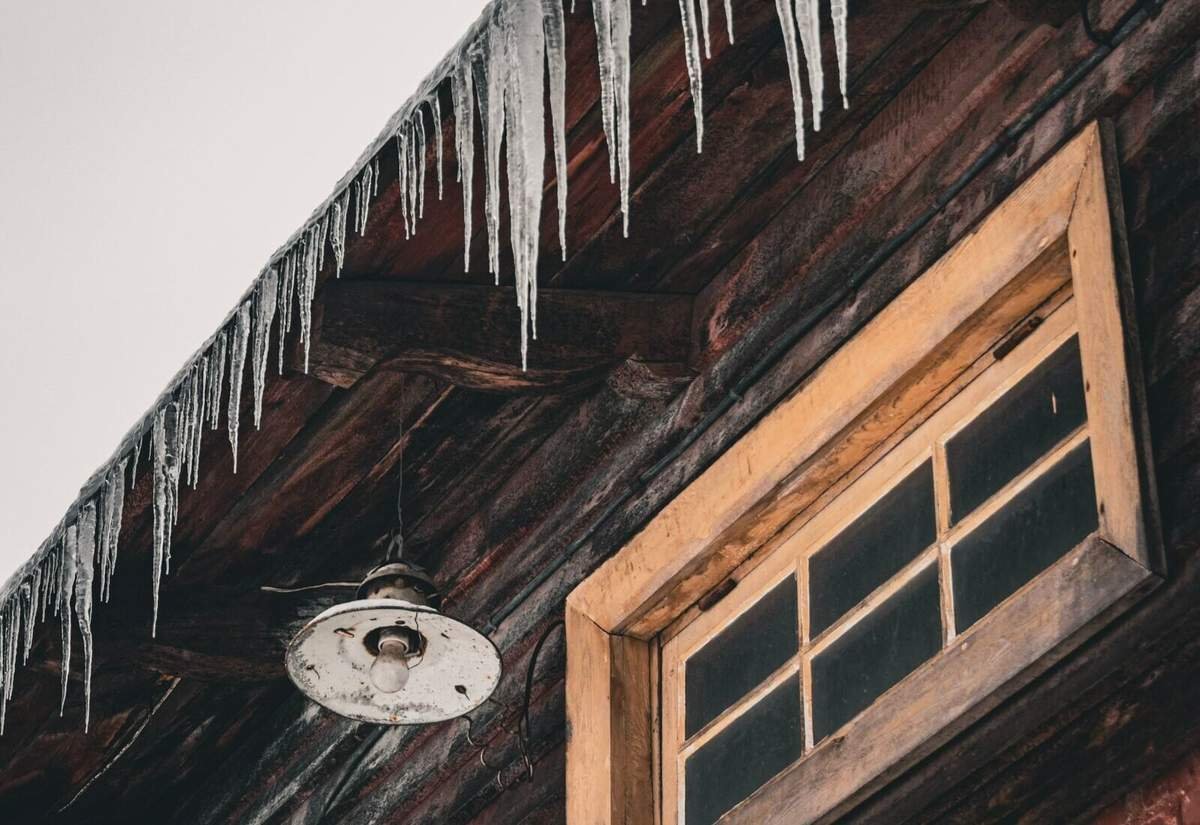
- Visible ice ridge or icicles along the eaves and gutters.
- Stain is on an upper floor, often near an exterior wall or eave line.
- Shingles look undamaged from the street despite the interior leak.
Signs it’s a shingle or flashing failure
- Stain appears regardless of freeze-thaw timing, including in dry weather.
- You can spot a torn, curled, or missing shingle, or damaged flashing, from the ground.
- Leak location tracks to a specific penetration — a vent pipe, chimney, or skylight.
- Staining worsens steadily rather than in a start-stop seasonal pattern.
The freeze-thaw window that makes diagnosis tricky
Grand Rapids’ snow tapers from roughly 7.6″ in March to about 2.0″ in April, with repeated above- and below-freezing swings through that stretch. This freeze-thaw cycling is exactly when marginal flashing, nail pops, and worn valleys are most likely to start leaking on their own — independent of any ice dam — because water keeps working into and expanding within small gaps.
That overlap is why March and April leaks are the hardest to self-diagnose: both causes are active in the same weeks. A licensed roofer checking the eaves, valleys, and attic together is the reliable way to tell them apart.
What to do either way
- Photograph and date the stain, plus any visible ice or shingle damage.
- Note whether it changes with the weather over a few days.
- Don’t rely on a cosmetic ceiling patch alone — it won’t fix either root cause.
- Get a licensed roofer’s eave-to-attic look before assuming which one it is.
Questions Grand Rapids homeowners ask
My shingles look fine from the ground — can it still be an ice dam?+
Yes, and it’s common. Ice dam water is forced up under intact shingles at the eave, so the roof surface can look undamaged from the street while water leaks into the attic and shows up as an upper-floor ceiling stain.
Can I tell the difference myself without going on the roof?+
You can narrow it down by timing and location — ice dams track with thaw cycles and eave-side staining, shingle failures don’t. But confirming which one it is, and how bad it is, is safest left to a licensed roofer rather than climbing onto an icy roof yourself.
What if it’s both an ice dam and a shingle issue?+
It happens, especially on older roofs. An ice dam can also stress or lift shingles at the eave over time. A licensed roofer’s eave-to-attic assessment is built to catch that overlap rather than stopping at the first likely cause.
Will a ceiling repair fix the leak?+
A ceiling repair fixes the visible damage but not the cause. Whether it’s an ice dam or a shingle failure, the leak is likely to recur at the next snow or rain event unless the actual source at the roofline is addressed first.
Leak diagnosis across Grand Rapids & Kent County
We connect homeowners with licensed roofers throughout the Grand Rapids metro and surrounding West Michigan communities.
More ice dam guides for Grand Rapids homeowners
Get matched with a licensed Grand Rapids roofer
Call now and we’ll connect you with a licensed West Michigan roofer to diagnose whether it’s an ice dam or a shingle issue. No phone tag, no obligation.
Call now for a roofer
Independent dispatch service connecting homeowners with licensed local roofing professionals. We are not a roofing contractor.