Documenting Storm Damage for Insurance in Kent County
Documenting storm damage for an insurance claim in Kent County comes down to three things done immediately: photograph and date every damaged area, keep separate records for separate events, and get that record together before any repair begins. Grand Rapids Roofing Pros is an independent dispatch service that connects Kent County homeowners with licensed local roofers who can inspect and help document roof damage — we do not file, handle, or manage insurance claims, and we never guarantee a claim outcome.
Call now for a licensed local roofer
Call now and we’ll connect you by phone with the licensed local roofer you’re matched with — no phone tag, no obligation.
Ready to talk to someone about your roof?
Call to reach the licensed local roofer you’re matched with in Grand Rapids & West Michigan.
Call (901) 704-8932When you call, stay on the line for a few seconds while we match you with the licensed local roofer for your area. Have your address and a quick description of the problem ready.
We connect homeowners with independent licensed roofing professionals in the Grand Rapids area. We are not a licensed contractor and do not perform roofing work ourselves.
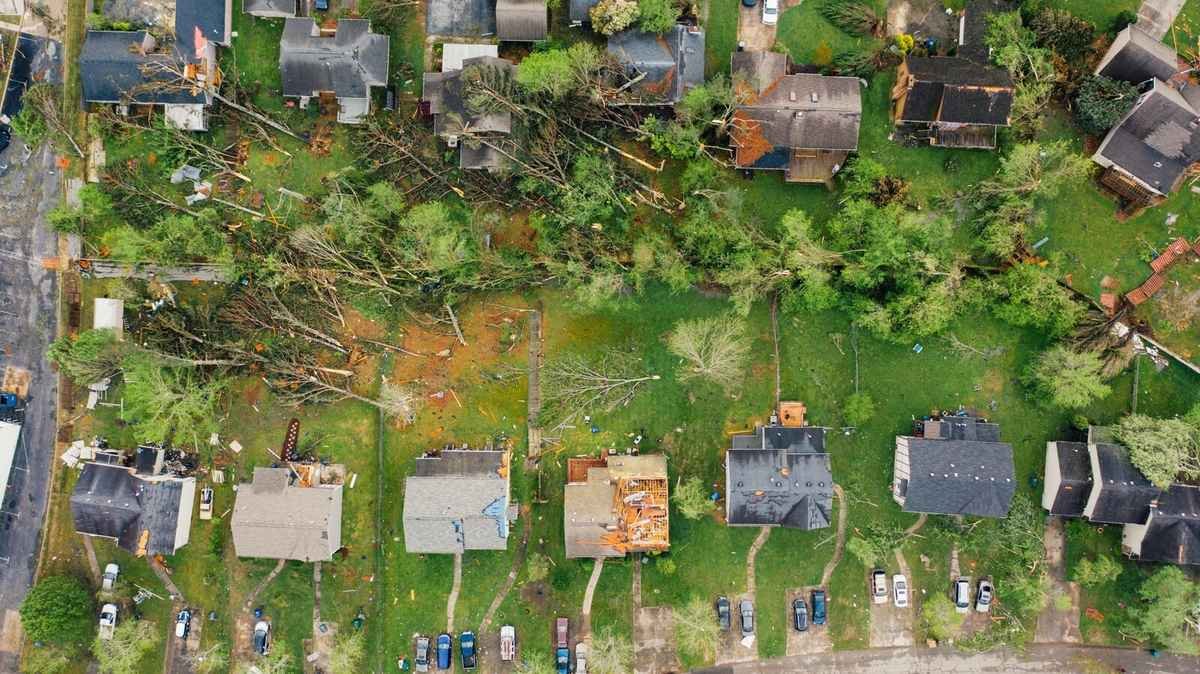
Quick answer: what to document, and why the timing matters
As soon as it is safe, photograph each affected roof plane, close-ups of the damage (missing shingles, an ice ridge, dented flashing, ceiling staining), and the date discovered. Keep winter ice-dam intrusion and summer wind or hail as separate records for your Kent County claim. After you file proof of loss, Michigan law (MCL 500.2006) requires the insurer to specify its needs within 30 days and settle within 60. A licensed roofer can inspect and document the roof; the coverage decision stays with your insurer.
Wide shots, close-ups, and a date — in that order
Start with a wide-angle photo of each side of the roof and house so an adjuster can see the damage in context, then move to close-ups of each specific problem area — a bruised or missing shingle, a dented gutter, a cracked vent boot, an ice ridge at the eave, or ceiling staining inside. Every photo should have a date attached, either through your phone’s metadata or a note you keep alongside it. A short narrated video walking each elevation of the house, saying the date and what you’re looking at out loud, adds a second layer of evidence that is hard to dispute later.
Where you can, back up the visual record with outside confirmation: a screenshot of local weather coverage or radar for the day in question helps tie the damage to a specific, dateable event rather than an undated, ongoing condition.
Documentation checklist
- Wide shot of each roof plane & elevation
- Close-up of every specific damage point
- Date noted or captured in photo metadata
- Interior shots of any ceiling or wall staining
- Winter and summer events kept in separate folders
The four-step documentation timeline
The same sequence applies whether the damage is a January ice ridge or a July hailstorm — only the details you’re photographing change.
Photograph immediately
Wide shots and close-ups, dated, as soon as it’s safe to be near the affected area.
Separate by event type
Winter ice-dam water intrusion and summer wind or hail impact go in different records, described separately.
Get a licensed assessment
A licensed roofer’s inspection notes add a professional layer to your own photo record.
File promptly
Michigan’s statutory response clock starts once your claim and proof of loss are submitted — don’t sit on the documentation.
Why does prompt documentation have a legal deadline behind it?
Michigan doesn’t leave claim response times to an insurer’s discretion. State law sets a specific clock once your proof of loss is in — which is exactly why the documentation needs to be complete the first time.
An insurer must specify in writing what constitutes satisfactory proof of loss within 30 days of receiving your claim.
The supported portion of a claim is generally due within 60 days of the insurer receiving your proof of loss.
Annual interest that can attach to amounts not paid on a timely basis under the statute.
The Michigan Dept. of Insurance & Financial Services enforces these timely-payment rules.
These are statutory timelines under the Michigan Insurance Code, not a promise about your specific claim — every policy and claim is different, and only your insurer determines coverage. Source: Michigan Legislature — MCL 500.2006.
Why does a Grand Rapids roof often need two different records in one year?
Kent County roofs commonly face two distinct damage seasons: winter ice-dam and snow-load water intrusion between December and March, and warm-season wind and hail from summer convective storms. The same roof can show both in a single year, and mixing them into one undated, blended description makes it harder for an adjuster (or a licensed roofer helping you document) to evaluate either one properly. Treat them as two separate files from the start.
For the specifics of each, see our guide to ice dam water intrusion insurance claims and our breakdown of West Michigan’s hail and wind damage season, or start with the full storm damage roof repair overview for how licensed roofers assess and document both.
What NOT to do
- Don’t wait weeks to photograph — conditions and evidence change fast
- Don’t blend a winter event and a summer event into one description
- Don’t start repairs before documenting, unless it’s a safety emergency
- Don’t rely on memory for dates — write them down as you go
Questions Kent County homeowners ask
What should I photograph after storm damage to my roof?+
Wide-angle shots of every affected roof plane and elevation, close-ups of each specific damage point (missing shingles, dented flashing, an ice ridge, ceiling staining), and the date the damage was found. A short narrated video walkthrough adds a second layer of evidence.
How soon should I document damage after a storm hits Grand Rapids?+
As soon as it’s safe. Conditions change quickly — ice ridges melt, debris gets cleared, and memory of exact dates fades. Photograph and date everything before any repair work begins, unless there’s an active safety hazard.
Does documentation affect how fast my insurance claim gets processed in Michigan?+
Complete, dated documentation submitted with your claim helps establish proof of loss, which is what starts Michigan’s statutory response clock under MCL 500.2006 — insurers must specify what they need within 30 days and generally settle the supported portion within 60 days of receiving that proof.
Should I document ice dam damage the same way as wind or hail damage?+
Use the same core method (wide shots, close-ups, dates) but keep them as separate records. Ice-dam damage is a winter water-intrusion event; wind and hail damage is a summer impact event, and adjusters typically evaluate each on its own terms.
Can a licensed roofer help me document roof damage for a claim?+
Yes. A licensed local roofer can inspect the roof, add professional assessment notes to your own photo record, and point out damage that isn’t obvious from the ground. We connect Kent County homeowners with a licensed roofer for exactly this — we don’t file or manage the claim itself.
Storm documentation help across Grand Rapids & Kent County
Part of the broader West Michigan roofing resource from Grand Rapids Roofing Pros — we connect homeowners with licensed roofers throughout the metro.
Continue the storm & insurance series
Get matched with a licensed Kent County roofer
Call now and we’ll connect you with a licensed West Michigan roofer for an inspection and documentation support. No phone tag, no obligation.
Call now for a roofer
Independent dispatch service connecting homeowners with licensed local roofing professionals. We are not a roofing contractor.