Ice Dam Removal in Walker, MI
Last updated: September 2026
Ice dam removal in Walker, MI is complicated by something no other Grand Rapids ring city has to the same degree: elevation spread. The city’s own adopted parks master plan puts its terrain at roughly 780 feet in the north down to about 590 feet in the Grand River valley — nearly 190 feet of difference inside one municipality. The same storm behaves differently at each end, and so does the melt-refreeze cycle that builds an ice dam. Grand Rapids Roofing Pros is an independent dispatch service connecting Walker homeowners with licensed local roofers who steam dams off safely and then find the heat behind them. Call now to get matched.
Ready to talk to someone about your roof?
Call to reach the licensed local roofer you’re matched with in Grand Rapids & West Michigan.
Call (901) 704-8932When you call, stay on the line for a few seconds while we match you with the licensed local roofer for your area. Have your address and a quick description of the problem ready.
Call now for a licensed local roofer
Call now and we’ll connect you by phone with the licensed local roofer you’re matched with — no phone tag, no obligation.
📞 Call Now — (901) 704-8932We connect homeowners with independent licensed roofing professionals in the Grand Rapids area. We are not a licensed contractor and do not perform roofing work ourselves.
Why do ice dams form differently across Walker, MI?
Because Walker is not one climate. The city’s parks master plan documents terrain running from about 780 feet above sea level in the north down to roughly 590 feet in the Grand River valley, and that spread changes how long a snow load survives. Higher, more exposed ground north of I-96 — around English Hills and Alpine Estates — runs colder overnight and holds snow through marginal days, which is exactly the sustained snowpack a dam needs. Lower ground near the river warms and clears faster but sees more thaw-refreeze cycling, which is the other half of the same equation. Grand Rapids normals show roughly 83 days a year that fall to freezing and climb back above it, and each of those days is an opportunity for a ridge to grow.
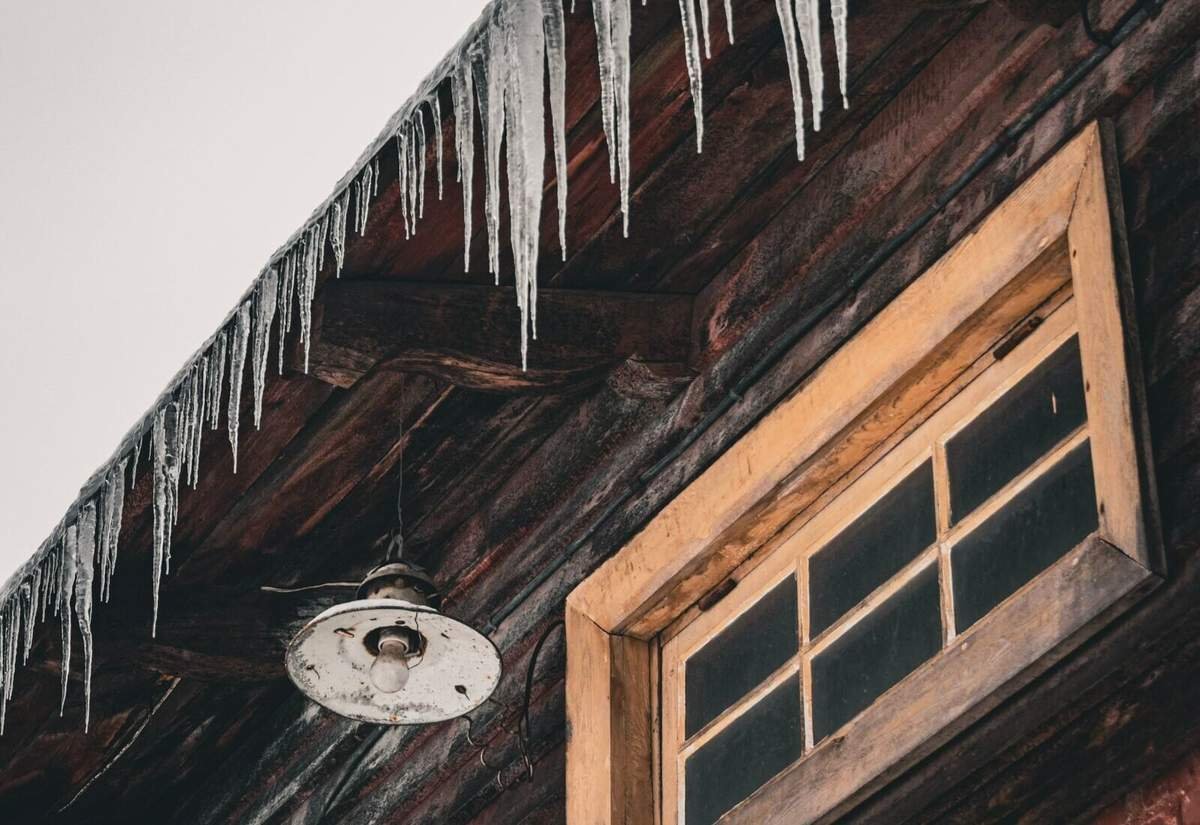
Melting the ridge is the emergency. Finding the heat is the fix.
An ice dam is a heat problem in winter clothing. Warm air leaking from the living space into the attic warms the roof deck, the snow above it melts, the meltwater runs down past the heated wall line onto the cold overhang, and it refreezes into a ridge. Each thaw adds a layer, and the water pooled behind that ridge finds shingle laps that were never designed to hold standing water.
In Walker that cycle runs at different speeds on different streets. A house on the high north side may hold one deep pack for weeks; a house near the Grand River valley may cycle through several shallower thaws in the same period. Both build dams, but the pattern differs, and a roofer who works the whole city recognises which one is in front of them.
Signs a Walker roof needs the attic checked, not just the ice cleared
- A ridge that rebuilds in the same spot every January, regardless of snowfall totals.
- Icicles heaviest over a heated room rather than over an unheated garage.
- A ceiling or wall-top stain that appears during a thaw, not during rain.
- Frost or damp sheathing visible in the attic on a cold, clear morning.
Why Walker’s ice dams need a city-specific eye
Three things a roofer should know about Walker before recommending anything beyond removal.
Nearly 190 feet of elevation inside one city
Walker’s 2023 parks master plan records terrain from roughly 780 feet in the north to about 590 feet in the Grand River valley. Snow retention, overnight lows and thaw timing all differ meaningfully between the two ends.
The youngest stock of the four ring cities
Census estimates put Walker’s median structure at 1984, with the 1990s its largest single build decade. Newer roofs are less likely to be missing the eave ice barrier, so a Walker dam is more often a ventilation and air-sealing problem than a code-vintage one.
Water everywhere, in three creeks and a river
The Grand River wraps the eastern and southern borders, Indian Mill Creek runs through the centre and north, Sand Creek sits in the northwest and Tallman Creek bisects the south. The mature cover along those corridors shades roof planes that never fully clear.
How an ice dam gets handled on a Walker roof
Removal method, the attic diagnosis, and the local permitting picture.
Steam removal, and what not to do instead
Licensed crews use low-pressure steam because it releases the ice at the contact surface without striking the shingle. Chipping is the common instinct and the most damaging one: asphalt shingles are brittle at the temperatures a Grand Rapids January normally delivers, where the 1991–2020 normals put the average low at 18.6 degrees and the average high at 31.0.
Calcium chloride in a stocking can cut a drainage channel through a dam and relieve an active leak. It does not remove the dam, it runs corrosive melt across flashing, gutters and plantings, and it leaves the cause entirely untouched. Treat it as a stopgap while a licensed roofer is on the way.
The attic diagnosis on 1980s and 1990s stock
Walker’s stock is newer than its neighbours, which shifts the likely findings. Rather than a missing eave membrane, the recurring issues are air leakage and intake blockage: unsealed can lights and attic hatches, bath fans terminating in the attic, and blown insulation gradually pushed out over the soffit vents until the intake side of the ventilation loop stops working.
The second recurring finding is geometric. Walker’s 1990s subdivisions favour more complex rooflines — multiple gables, dormers, bonus rooms over garages — and every valley and roof-to-wall step is a place where meltwater concentrates and where a short, poorly connected attic run can sit warmer than the rest of the house.
Where Michigan code fits at the eave
The Michigan Residential Code requires an ice barrier on roofs in areas with a history of eave ice: two layers of underlayment cemented together, or a self-adhering polymer modified bitumen sheet, running from the lowest edges of all roof surfaces to at least 24 inches inside the exterior wall line, and additionally at least 36 inches measured along the slope on roofs of 8:12 or steeper.
On a Walker house built in the 1990s that barrier is usually present, which is genuinely good news — but present is not the same as adequate on a complex roof. Valleys, dormer sidewalls and the step where a bonus room meets the main wall are the places to have a roofer look, because they concentrate water in ways a straight eave does not.
Permits and licensing in Walker
Walker runs its own Building Department inside its Community Development Department, at 4243 Remembrance Road NW, reachable at 616-791-6858, and describes its role as helping residents and businesses meet the State of Michigan building, mechanical, electrical and plumbing codes. Its published residential guidance does not specifically address reroofing either way, so whether a given job needs a permit is a determination for the city’s building official rather than something a website should assert.
On licensing, Michigan names roofing directly among the crafts covered by a residential builder or maintenance and alteration contractor license through LARA, with the statutory exemption stopping below an aggregate contract price of 600 dollars and an anti-splitting clause preventing a larger job from being divided to evade it. Every roofer we match you with is licensed and independent of us.
Other roofing help for Walker homeowners
Ice dams rarely arrive alone. These are the pages Walker homeowners read next.
Roof Replacement in Walker
The metro’s youngest ring-city stock, mostly reaching its first replacement window now.
Explore replacementStorm Damage in Walker
Where inch-diameter hail was logged in April 2024, on open high ground north of the river.
Explore storm damageAll Roofing in Walker, MI
The city-wide overview: Standale, Alpine, the river valley and every service we match in Walker.
See the city guideIce Dam Removal — Metro Guide
Our flagship West Michigan ice-dam guide: the physics, the removal method and the attic fix in depth.
See the flagship guideHow Ice Dams Form
The step-by-step mechanism, from attic heat to the refreeze at the overhang.
Read the explainerNot sure what you are seeing?
Describe the ridge, the icicles or the stain and call now. We route you to a licensed roofer who works Walker roofs.
Get matched nowWhat a Walker winter puts on a roof
From roughly 780 feet in the north to about 590 feet in the Grand River valley, per Walker’s 2023 parks master plan.
NOAA/NCEI 1991–2020 normal at Gerald R. Ford International Airport — the load every Walker roof carries.
Derived from NOAA normals: days that fall to 32°F or below and climb back above it — every one a chance for a dam to grow.
Michigan Residential Code R905.1.2 minimum ice-barrier run inside the exterior wall line.
Sources: NOAA/NCEI 1991–2020 Climate Normals (Gerald R. Ford International Airport); U.S. Census Bureau, American Community Survey 5-year estimates (median year structure built, City of Walker); City of Walker Parks & Recreation Master Plan (2023, elevation and floodplain figures); City of Walker Building Department; NOAA/NCEI Storm Events Database (Kent County); Michigan Residential Code R905.1.2 and R908.3.
Walker districts and neighborhoods we cover
From the high ground around English Hills and Alpine Estates in the north, through the Alpine and Remembrance corridors, down to Standale and the Grand River valley.
Ice dam removal in nearby cities
Questions Walker homeowners ask about ice dams
Why does my neighbourhood get ice dams when another part of Walker does not?+
Elevation and exposure. Walker’s own parks master plan documents terrain running from roughly 780 feet in the north down to about 590 feet in the Grand River valley, nearly 190 feet of spread inside one city. Higher, more exposed ground holds a snowpack through marginal days that would clear a lower, warmer lot, and a sustained snowpack is what a dam needs to form.
My house is from the 1990s. Should it not already have the ice barrier?+
Probably, and that is genuinely useful. Walker’s median structure year is 1984 with the 1990s its largest build decade, so most roofs here were built when the eave ice barrier was standard practice. On newer stock, a recurring dam is more often a ventilation or air-sealing problem — blocked soffit intake, an unsealed hatch, a bath fan venting into the attic — than a missing membrane.
Does Walker require a permit to reroof?+
Walker runs its own Building Department within Community Development, at 4243 Remembrance Road NW, and its published residential permit guidance does not specifically address reroofing either way. That makes it a determination for the city’s building official. Call the department at 616-791-6858, or ask a roofer who pulls Walker permits regularly what current practice is.
Should I knock the ice down myself?+
We would not. Asphalt shingles are brittle at the January temperatures Grand Rapids normally sees, where the average low is 18.6 degrees, so chipping tends to damage the shingle surface you are trying to protect. Ladder work on an iced roofline in Walker’s wind exposure is its own hazard. Steam removal by a licensed crew takes the ice off without striking the roof.
Do you remove ice dams yourselves?+
No. Grand Rapids Roofing Pros is an independent dispatch service. We connect Walker homeowners with licensed, independent local roofing professionals; we do not perform roofing or ice-dam work ourselves, and we do not guarantee any particular contractor, price, timeline or insurance outcome.
About this guide: Researched from NOAA/NCEI climate normals for Gerald R. Ford International Airport, NWS Grand Rapids storm summaries, the Michigan Residential Code, Michigan LARA licensing rules, and the City of Walker’s adopted parks master plan and Building Department guidance by the Grand Rapids Roofing Pros research team. We are a homeowner-to-roofer matching service; we do not perform roofing work ourselves. Learn more About Us or see How We Vet Roofing Partners.
Get matched with a licensed local roofer
Call now and we will connect you with a licensed West Michigan roofer who clears the dam safely and then looks at the attic that built it. No phone tag, no obligation.
Call now for a roofer
Independent dispatch service connecting homeowners with licensed local roofing professionals. We are not a roofing contractor.