Roof Repair vs. Replacement in Grand Rapids: How to Decide
Deciding between roof repair vs. replace in Grand Rapids usually comes down to one overlooked detail: whether the existing roof has the eave ice-and-water barrier Michigan code (R905.1.2) requires. Older West Michigan roofs often don’t, which changes the math on a “simple” repair. Grand Rapids Roofing Pros is an independent dispatch service that connects homeowners with licensed local roofers who can assess which path actually fits your roof’s age, damage pattern, and code status.
Call now for a licensed local roofer
Call now and we’ll connect you by phone with the licensed local roofer you’re matched with — no phone tag, no obligation.
Ready to talk to someone about your roof?
Call to reach the licensed local roofer you’re matched with in Grand Rapids & West Michigan.
Call (901) 704-8932When you call, stay on the line for a few seconds while we match you with the licensed local roofer for your area. Have your address and a quick description of the problem ready.
We connect homeowners with independent licensed roofing professionals in the Grand Rapids area. We are not a licensed contractor and do not perform roofing work ourselves.
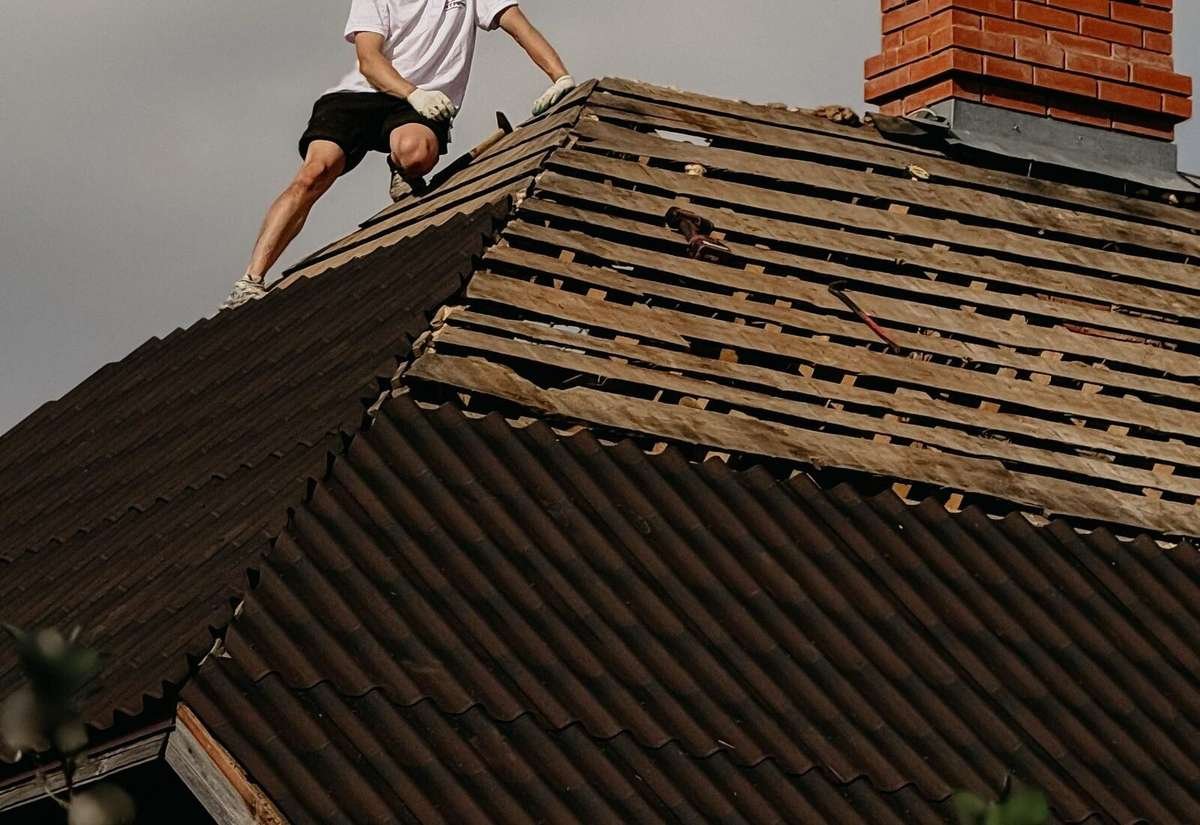
Quick answer: repair vs. replace a Grand Rapids roof
Quick answer: Repair usually makes sense when damage is isolated (a valley, a flashing section, one storm event) and the Grand Rapids roof is under roughly 15 years old. Replacement is the stronger call when damage spans multiple areas or ice dams have caused repeat leaks. A licensed local roofer can also check whether the eave has the ice-and-water barrier Michigan code (R905.1.2) requires, since a missing membrane changes the value of a repair-only fix.
The code detail most “repair vs. replace” guides skip
The Michigan Residential Code (R905.1.2) requires a self-adhering ice barrier at the eaves of every new or replaced roof, running at least 24 inches inside the exterior wall line. Michigan LARA applies this requirement statewide, in every county — a formal acknowledgment that ice-dam water intrusion is an expected regional failure mode, not a rare event.
The catch: a roof re-covered before that requirement, or repaired only at the surface, can be missing that membrane entirely. A shingle-only repair on that kind of roof patches the symptom while leaving the eave exposed to the exact meltwater-backup mechanism that caused the leak in the first place. An aging shingle field compounds the problem: once the material itself is failing broadly rather than in one isolated spot, and the ice dams have already caused leaks in more than one location, patch repairs stop holding reliably and replacement becomes the more durable answer.
Ask your roofer this before choosing
- Does the eave already have a code-compliant ice-and-water membrane, or is it missing?
- Has this same section leaked more than once across different winters?
- Is the damage isolated to one plane, or spread across valleys, eaves, and the field?
- Is the attic insulation and ventilation adequate, or part of the underlying problem?
Repair or replace — the honest tradeoffs
Neither option is universally “better.” The right one depends on the roof’s age, code status, and how widespread the damage actually is.
Repair
Targeted fix at the source of a specific leak
- Addresses a single, identified failure point — a valley, flashing detail, or eave section
- Faster turnaround than a full tear-off
- Makes sense on a newer roof with an otherwise sound shingle field
- Doesn’t upgrade the rest of the roof to current code if it predates R905.1.2
- Can recur if the true root cause (attic heat, ventilation) isn’t addressed
- Not cost-effective once damage is spread across multiple areas
Full Replacement
Whole-roof reset, including the eave code upgrade
- Brings the entire roof up to Michigan’s current ice-barrier requirement
- Resets the clock on an aging shingle field with multiple failure points
- One coordinated project instead of repeated repair calls
- A bigger project than a targeted repair, with more scheduling lead time
- Not necessary if the roof is younger and the damage is genuinely isolated
- Best scheduled outside the coldest stretch of winter when possible
Five signs replacement is the smarter call
- Repeat leaks in different spots. A pattern of ice-dam or freeze-thaw leaks in more than one location across multiple winters usually points to systemic age or ventilation issues, not one bad flashing detail.
- No eave ice barrier on an older roof. If a licensed roofer confirms the membrane required under R905.1.2 was never installed, a surface repair leaves that exposure in place.
- Shingles are past their expected service life. West Michigan’s freeze-thaw cycling and standing winter snowpack wear standard asphalt shingles faster than a milder climate, so an older roof may already be near the end of its usable life.
- Damage spans multiple planes or valleys. Complex rooflines with several valleys concentrate snow and ice in more than one place; if more than one of those areas is already failing, a single repair won’t address the rest.
- Attic insulation or ventilation is clearly inadequate. If the warm-attic mechanism that drives ice dams hasn’t been corrected, repeated repairs are treating a symptom that will keep coming back.
There is no single right answer — a five-year-old roof with one damaged valley almost always calls for a repair, while a 20-year-old roof with recurring leaks in different spots and no eave barrier is usually better served by replacement. The only way to know which situation you’re in is a licensed, on-site assessment.
Questions Grand Rapids homeowners ask
How do I know if my Grand Rapids roof needs full replacement instead of a repair?+
The clearest signals are repeat leaks in more than one location across different winters, damage spread across multiple roof planes or valleys, or confirmation that the roof lacks the eave ice barrier Michigan code requires. A single, isolated leak on an otherwise sound roof is usually a repair.
Does a repair bring an older roof up to Michigan code?+
Not necessarily. A shingle-only repair addresses the visible damage but doesn’t automatically add the ice-and-water membrane required at the eave under R905.1.2 if that membrane was never installed. Only a roofer who inspects the eave directly can confirm whether it’s present.
Is replacement always the safer choice for an older home?+
No. Age alone doesn’t decide it — a well-maintained older roof with good attic ventilation and no history of repeat leaks can still be a good repair candidate. The pattern of damage and the eave’s code status matter more than the roof’s age by itself.
Can I get a repair now and replace later?+
In some cases, yes — a targeted repair can buy time on an otherwise sound roof. A licensed roofer can tell you whether your specific situation is a reasonable candidate for that approach or whether it’s likely to need a bigger fix sooner than expected.
What should I ask a roofer during the assessment?+
Ask whether the eave already has a code-compliant ice barrier, whether the damage is isolated or spread across the roof, and whether previous leaks in different spots suggest an attic ventilation issue rather than a one-time storm event.
Go deeper on either path
Whichever direction fits your roof, here’s where to learn more before you get matched.
Roof repair and replacement across Grand Rapids
Get an honest, on-site read on repair vs. replace
Call now and a licensed West Michigan roofer will assess the actual damage and code status before recommending a path. No phone tag, no obligation.
Call now for a roofer
Independent dispatch service connecting homeowners with licensed local roofing professionals. We are not a roofing contractor.