Ice Dam Removal in Wyoming, MI
Last updated: September 2026
Ice dam removal in Wyoming, MI is a winter problem with a housing-stock cause. Wyoming has the oldest residential inventory of the Grand Rapids metro’s four largest ring cities — a median structure built in 1969, with roughly two out of five homes standing since before 1960 — and older roofs are the ones most likely to predate the eave ice-barrier detail Michigan now requires. Grand Rapids Roofing Pros is an independent dispatch service that connects Wyoming homeowners with licensed local roofers who steam dams off safely and then look for the reason it formed. Call now to get matched.
Ready to talk to someone about your roof?
Call to reach the licensed local roofer you’re matched with in Grand Rapids & West Michigan.
Call (901) 704-8932When you call, stay on the line for a few seconds while we match you with the licensed local roofer for your area. Have your address and a quick description of the problem ready.
Call now for a licensed local roofer
Call now and we’ll connect you by phone with the licensed local roofer you’re matched with — no phone tag, no obligation.
📞 Call Now — (901) 704-8932We connect homeowners with independent licensed roofing professionals in the Grand Rapids area. We are not a licensed contractor and do not perform roofing work ourselves.
Why do Wyoming, MI homes get ice dams so consistently?
Because Wyoming combines two ingredients. The climate one is metro-wide: Gerald R. Ford International Airport averages 77.6 inches of snow a year under the 1991–2020 NOAA normals, and roughly 78 percent of it falls in December, January and February, so a snow load sits on Wyoming roofs for weeks rather than days. The local one is the housing stock. Census estimates put Wyoming’s median structure at 1969 with about 39 percent built before 1960, and the city’s own master plan notes that its northern and eastern census tracts hold house ages as old as 76 years. Older attics were insulated and vented to older standards, and older roofs may predate consistent application of the eave ice barrier.
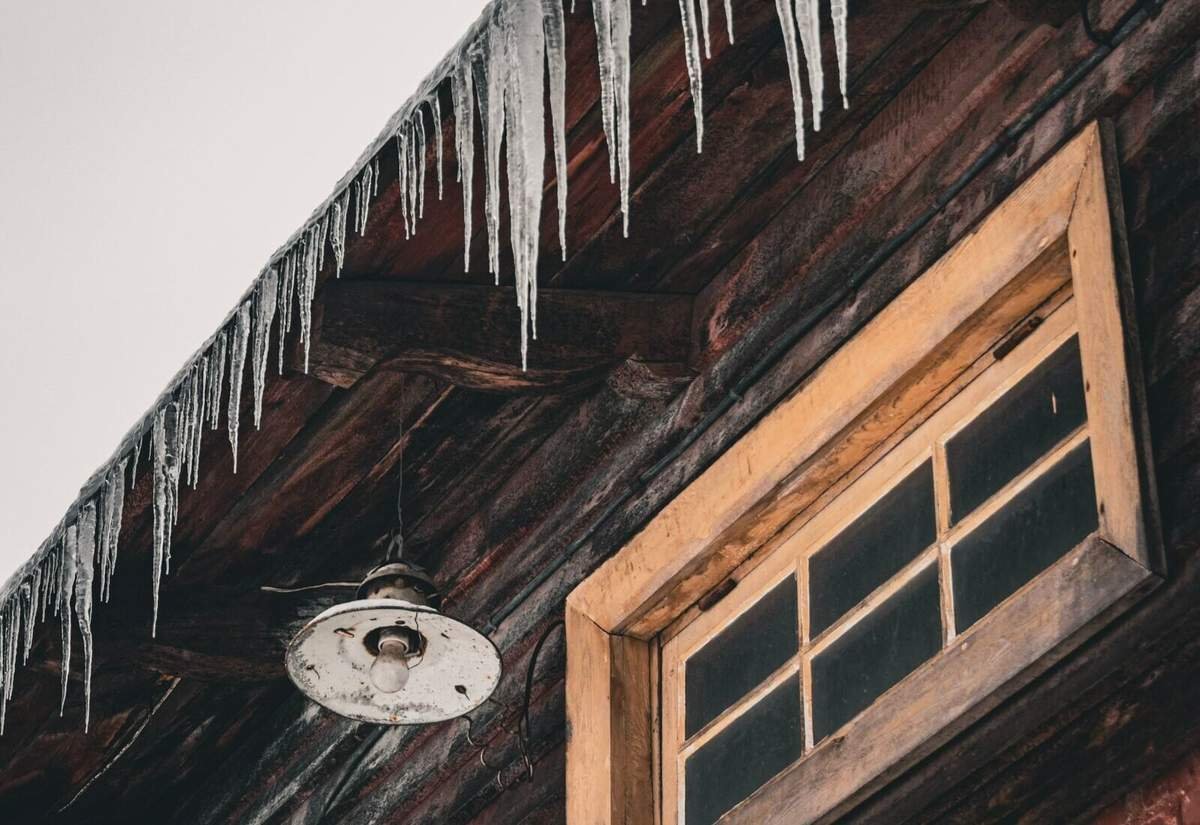
Melting the dam is the emergency. Finding the heat is the fix.
An ice dam is a heat problem wearing a weather costume. Warm air escaping the living space into the attic warms the roof deck, snow above it melts, the meltwater runs down to the cold overhang past the heated wall line, and it refreezes into a ridge. Each thaw adds another layer, and the pooled water behind the ridge finds the shingle laps, which were never designed to hold standing water.
That is why the removal call and the diagnosis call are two different conversations. Steam removal takes the ice off without gouging shingles the way chipping does. But if nothing changes in the attic, the same ridge rebuilds on the next thaw — and in Grand Rapids the normals show roughly 83 days a year when the temperature drops to freezing or below and then climbs back above it, which is a great many chances to rebuild.
Signs a Wyoming roof needs the attic checked, not just the ice cleared
- A ridge of ice that rebuilds in the same spot every January.
- Icicles heaviest over a heated room rather than over the garage.
- A ceiling or wall-top stain that appears during a thaw, not during rain.
- Frost or damp sheathing visible in the attic on a cold, clear morning.
Why Wyoming’s ice dams are a housing-stock story
Three things a roofer should know about Wyoming before recommending anything more than a steam visit.
The oldest stock of the four ring cities
Census estimates put Wyoming’s median structure at 1969, against 1978 in Grandville, 1983 in Kentwood and 1984 in Walker. Roughly 39 percent of Wyoming’s homes were built before 1960 — the largest single decade being the 1950s.
Three neighborhood generations, one city
The city’s adopted master plan describes a character that “distinctly transitions from postwar neighborhoods in the north to mid-20th century suburban development in its center, and newer residential development in the south.” A north-end roof and a Panhandle roof are not the same job.
Buck Creek and Plaster Creek corridors
Wyoming is drained by Buck Creek, Plaster Creek and the Grand River along its northern edge. The mature tree canopy along those corridors shades roof planes that never fully clear between storms, which extends how long a snow load sits.
How an ice dam gets handled on a Wyoming roof
Removal, diagnosis, and the permit question homeowners in Wyoming ask most.
Steam, not chipping, not salt
Low-pressure steam is the method licensed crews use because it melts the ice at the contact surface and releases the dam without striking the shingles. Chipping with a hammer or a spade on a cold roof is how a winter problem becomes a spring problem: asphalt shingles are brittle at Grand Rapids January temperatures, where the 1991–2020 normals put the average low at 18.6 degrees and the average high at 31.0, just under freezing.
Rock salt and calcium chloride in socks are widely repeated as a homeowner fix. They can open a drainage channel through a dam in a pinch, but they do not remove it, they run corrosive melt across flashing, gutters and whatever is planted below, and they do nothing about the heat that built the dam. Treat them as a stopgap while a licensed roofer is on the way, not a repair.
The attic-side diagnosis that follows
The parts of a roof assembly that decide whether a dam forms again are mostly not on the roof. Air sealing at top plates, can lights, bath fans and the attic hatch controls how much warm air reaches the deck. Insulation depth controls how much heat conducts through. Intake at the soffit and exhaust at the ridge control whether the attic runs at outdoor temperature, which is the goal.
On older Wyoming homes the common findings are ordinary: soffit vents blocked by insulation pushed to the eave, a bath fan discharging into the attic instead of through the roof, or an addition whose attic was never connected to the main ventilation path. None of those show up from the driveway, which is why a removal-only visit is an incomplete answer.
Where Michigan code fits
The Michigan Residential Code requires an ice barrier on roofs in areas with a history of eave ice: two layers of underlayment cemented together, or a self-adhering polymer modified bitumen sheet, running from the lowest edge of the roof to a point at least 24 inches inside the exterior wall line. On roofs pitched 8:12 or steeper the membrane must also run at least 36 inches measured along the slope from the eave edge.
Note the wording. The 24 inches is measured inside the wall line, not up from the eave edge, so on a home with a normal overhang the protected band is considerably wider than two feet of roof. A pre-1960 Wyoming house that has been reroofed once may or may not have that band; a licensed roofer can tell during an inspection, and it becomes a decision point if replacement is on the table.
Permits and licensing in Wyoming
Wyoming runs its own Inspections Department out of 1155 28th Street SW rather than contracting inspections to a third party or the county. The city has moved electrical, mechanical and plumbing permits onto an online portal, but its published guidance states that permits requiring detailed plans and more thorough staff review, such as building permits, must still be applied for in person. Whether a given reroof needs a permit is the building official’s call, so a roofer who works Wyoming routinely is the one to ask.
On the licensing side, Michigan lists roofing explicitly among the crafts covered by a residential builder or maintenance and alteration contractor license issued through LARA, and the statutory exemption stops at an aggregate contract price under 600 dollars — with an anti-splitting clause that blocks carving one job into smaller contracts. Every roofer we match you with is licensed and independent.
Other roofing help for Wyoming homeowners
Ice dams rarely arrive alone. These are the pages Wyoming homeowners read next.
Roof Replacement in Wyoming
When a pre-1960 Wyoming roof is at the end of its life, replacement is also the moment the eave ice barrier gets built in.
Explore replacementStorm Damage in Wyoming
Wind and hail damage documented before an insurance conversation, on the same Wyoming housing stock.
Explore storm damageAll Roofing in Wyoming, MI
The city-wide overview: housing stock, corridors and every roofing service we match in Wyoming.
See the city guideIce Dam Removal — Metro Guide
Our flagship West Michigan ice-dam guide, covering the physics, the removal method and the attic fix in depth.
See the flagship guideAttic Ventilation & Prevention
The intake-and-exhaust side of the problem, which is where a repeat ice dam is usually solved for good.
Read the prevention guideNot sure what you are seeing?
Describe the stain, the icicles or the ridge and call now. We route you to a licensed roofer who works Wyoming roofs.
Get matched nowWhat a Wyoming winter puts on an older roof
U.S. Census ACS estimate for the City of Wyoming — the oldest median of the metro’s four largest ring cities.
Share of Wyoming’s housing units predating 1960, the largest single decade being the 1950s.
NOAA/NCEI 1991–2020 normal for January alone at Gerald R. Ford International Airport — the snowiest month.
Michigan Residential Code R905.1.2 minimum ice-barrier run inside the exterior wall line.
Sources: NOAA/NCEI 1991–2020 Climate Normals (Gerald R. Ford International Airport); U.S. Census Bureau, American Community Survey 5-year estimates (median year structure built, City of Wyoming); Wyoming [re]Imagined Master Plan (adopted 2021); Michigan Residential Code R905.1.2 and R908.3; City of Wyoming Inspections Department.
Wyoming corridors and neighborhoods we cover
From the older north-end streets near Burton and Godfrey down through the 28th Street corridor to the newer Panhandle subdivisions in the south.
Ice dam removal in nearby cities
Questions Wyoming homeowners ask about ice dams
Is my older Wyoming roof missing the ice barrier Michigan code requires?+
Possibly. The Michigan Residential Code requires the eave ice barrier to run from the lowest roof edge to at least 24 inches inside the exterior wall line, and to run at least 36 inches along the slope on roofs 8:12 and steeper. Given that roughly 39 percent of Wyoming homes predate 1960, a fair number have been reroofed at least once under earlier practice. A licensed local roofer can check the eave detail during an inspection rather than guessing from the ground.
Should I knock the ice down myself?+
We would not. Asphalt shingles are brittle at the January temperatures Grand Rapids normally sees — an average low of 18.6 degrees — so chipping tends to break the shingle surface you are trying to protect, and ladder work on an iced roofline is how people get hurt. Steam removal by a licensed crew takes the ice off without striking the roof.
Why does the same spot dam up every single winter?+
Because the heat source has not changed. A ridge that rebuilds in the same place is pointing at something specific underneath — a blocked soffit run, a bath fan venting into the attic, a poorly sealed attic hatch, or an addition that was never tied into the main ventilation path. That is the attic-side diagnosis, and it is the part that stops the annual repeat.
Does Wyoming require a permit to reroof?+
Wyoming runs its own Inspections Department at 1155 28th Street SW, and its published guidance says permits needing detailed plans and fuller staff review, including building permits, must be applied for in person rather than through the online portal. Whether a specific reroof needs one is a determination for the city’s building official, so ask the department or a roofer who pulls Wyoming permits regularly.
Do you remove ice dams yourselves?+
No. Grand Rapids Roofing Pros is an independent dispatch service. We connect Wyoming homeowners with licensed, independent local roofing professionals; we do not perform roofing or ice-dam work ourselves, and we do not guarantee any particular contractor, price, timeline or insurance outcome.
About this guide: Researched from NOAA/NCEI climate normals for Gerald R. Ford International Airport, NWS Grand Rapids storm summaries, the Michigan Residential Code, Michigan LARA licensing rules, and the City of Wyoming’s adopted master plan and Inspections Department guidance by the Grand Rapids Roofing Pros research team. We are a homeowner-to-roofer matching service; we do not perform roofing work ourselves. Learn more About Us or see How We Vet Roofing Partners.
Get matched with a licensed local roofer
Call now and we will connect you with a licensed West Michigan roofer who removes the dam safely and then looks at the attic that built it. No phone tag, no obligation.
Call now for a roofer
Independent dispatch service connecting homeowners with licensed local roofing professionals. We are not a roofing contractor.