Roof Decking Replacement in Grand Rapids, MI
Roof decking replacement in Grand Rapids becomes necessary when the plywood or board sheathing beneath the shingles has been softened or rotted — most often by meltwater that worked its way under the shingle field during repeated ice-dam seasons rather than by the shingles themselves failing. Grand Rapids Roofing Pros is an independent dispatch service connecting homeowners with licensed local roofers for roof decking replacement.
Call now for a licensed local roofer
Call now and we’ll connect you by phone with the licensed local roofer you’re matched with — no phone tag, no obligation.
Ready to talk to someone about your roof?
Call to reach the licensed local roofer you’re matched with in Grand Rapids & West Michigan.
Call (901) 704-8932When you call, stay on the line for a few seconds while we match you with the licensed local roofer for your area. Have your address and a quick description of the problem ready.
We connect homeowners with independent licensed roofing professionals in the Grand Rapids area. We are not a licensed contractor and do not perform roofing work ourselves.
Quick answer: why does roof decking need replacing?
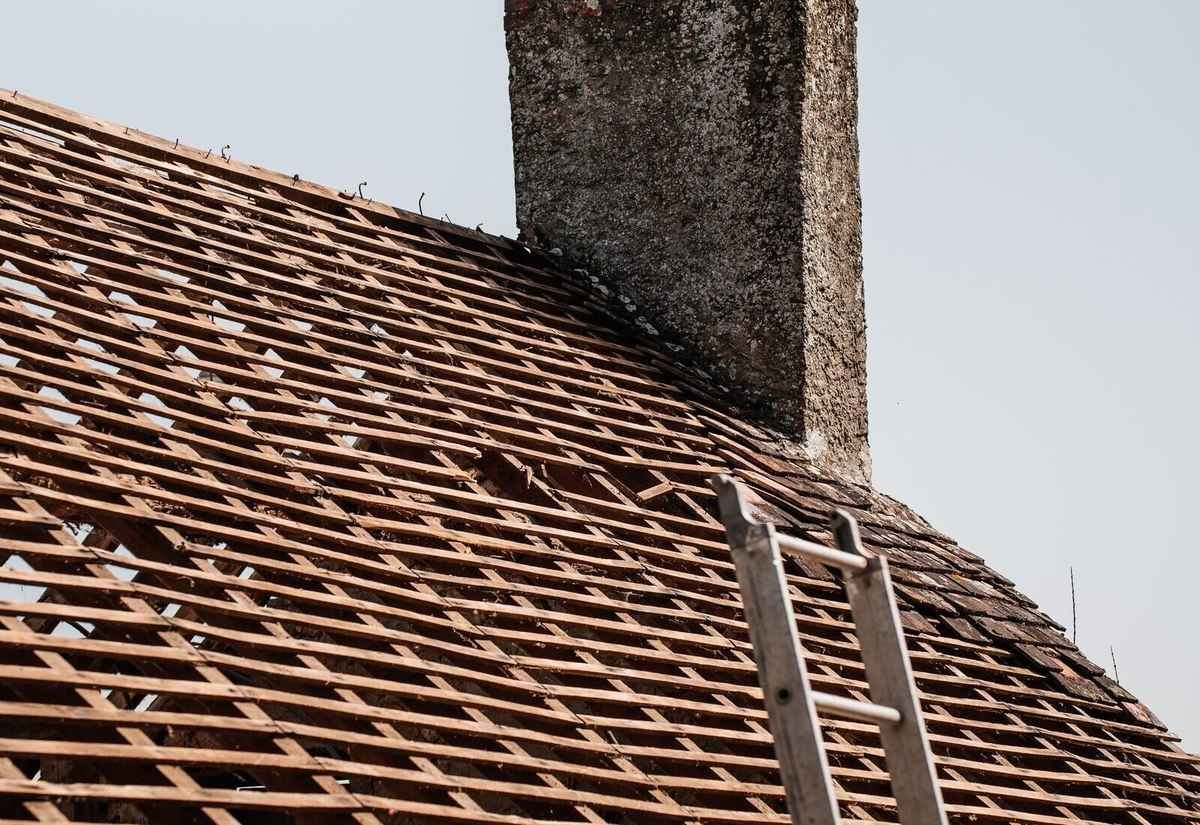
Quick answer: Roof decking is the wood sheathing that shingles and underlayment are fastened to. It isn’t visible until a roof is torn off, so replacement is often discovered mid-project rather than diagnosed in advance. The most common local cause isn’t age alone: it’s meltwater working under the shingle field during repeated ice-dam seasons, the same warm-attic, cold-eave mechanism documented in MSU Extension’s guidance, slowly softening decking over multiple winters. Grand Rapids homeowners can get matched with a licensed local roofer to check for it during a tear-off.
Decades of small leaks add up quietly
Grand Rapids’ older, near-downtown neighborhoods carry more of this risk simply because they’ve had more winters, and often less modern eave protection, to accumulate it. Heritage Hill, Grand Rapids’ oldest neighborhood, is documented at roughly 82.3% built in 1939 or earlier across more than 1,300 historic homes (NeighborhoodScout) — steep, complex Victorian and Foursquare rooflines that predate Michigan’s modern eave ice-barrier code (R905.1.2). A roof re-covered without ever installing that membrane can go decades with small amounts of ice-dam meltwater working under the shingles at the eave each winter, slowly saturating the decking below rather than causing an obvious, immediate leak.
By the time a homeowner notices interior staining or a soft spot underfoot, the decking has often already been compromised for more than one season.
Signs decking may already be affected
- A soft or spongy feel underfoot in specific spots when a roofer walks the roof.
- Sagging or an uneven roof plane visible from the ground or a ladder.
- Persistent staining on the same interior spot despite a shingle-only repair.
What a decking replacement addresses
Removing saturated or rotted sheathing
Cutting back to sound wood rather than fastening new shingles over a compromised deck.
Re-establishing a solid nailing base
Shingles rely on sound decking to hold fasteners correctly through Michigan’s wind and freeze-thaw cycles.
Pairing with the eave ice barrier
A decking replacement is also the moment to add the code-required ice-and-water membrane if an older roof never had one.
Questions Grand Rapids homeowners ask
How do I know if my roof needs decking replacement, not just new shingles?+
It’s often not visible until tear-off begins. Soft spots, sagging, or a roof plane that looks uneven from the ground can be early clues, but a licensed roofer confirms it once the shingles are off.
Is decking replacement always needed during a re-roof?+
No. Many roofs have sound decking and only need new shingles and underlayment. Replacement applies specifically to sections found to be rotted or saturated.
Why does this show up more in older Grand Rapids neighborhoods?+
Older housing stock has had more winters, and often lacked the modern eave ice barrier now required by Michigan code, giving meltwater more opportunities to slowly work into the decking over time.
Does decking replacement mean the whole roof needs replacing?+
Not necessarily. It’s frequently addressed as part of a full re-roof since the shingles have to come off anyway, but the scope depends on how much decking is affected.
Roof decking replacement across Grand Rapids & Kent County
We connect homeowners with licensed roofers throughout the Grand Rapids metro and surrounding West Michigan communities.
Related guides
Get matched with a licensed Grand Rapids roofer
Call now and we’ll connect you with a licensed West Michigan roofer to assess your roof, including the decking underneath. No phone tag, no obligation.
Call now for a roofer
Independent dispatch service connecting homeowners with licensed local roofing professionals. We are not a roofing contractor.