What Is Ice and Water Shield?
Ice and water shield is the self-adhering waterproof membrane installed under the shingles at a roof’s eaves and valleys — and in Grand Rapids and the rest of West Michigan, it is not optional. Grand Rapids Roofing Pros is an independent dispatch service that connects homeowners with licensed local roofers — here is what the membrane is, where it goes, and why it matters on a Kent County roof.
Call now for a licensed local roofer
Call now and we’ll connect you by phone with the licensed local roofer you’re matched with — no phone tag, no obligation.
Ready to talk to someone about your roof?
Call to reach the licensed local roofer you’re matched with in Grand Rapids & West Michigan.
Call (901) 704-8932When you call, stay on the line for a few seconds while we match you with the licensed local roofer for your area. Have your address and a quick description of the problem ready.
We connect homeowners with independent licensed roofing professionals in the Grand Rapids area. We are not a licensed contractor and do not perform roofing work ourselves.
Quick answer: a rubberized membrane Michigan code requires at the eaves
Ice and water shield is a self-adhering, rubberized-asphalt membrane installed on the roof deck, under the shingles, at eaves, valleys, and other leak-prone areas. Unlike standard felt underlayment, it seals around roofing nails and stays watertight even under standing water. The Michigan Residential Code (Section R905.1.2) requires this ice barrier on every new or replacement roof statewide, running from the eave edge to at least 24 inches inside the exterior wall. Grand Rapids Roofing Pros matches homeowners with roofers who install it to code.
Standard underlayment sheds water. Ice and water shield seals against it.
A conventional roofing underlayment is designed to shed water that is moving downhill under gravity — it is not designed to stay watertight against water that is standing still or being pushed uphill by pressure. That second scenario is exactly what happens at an eave once an ice dam forms: trapped meltwater backs up behind the ice ridge and is forced upward, under the shingle laps, rather than running off. Ice and water shield is a fully adhered, self-sealing membrane built for that reversed-pressure condition — it bonds to the deck and around every nail penetration, so there is no gap for backed-up water to exploit. Michigan requires it because the state is a documented ice-dam region, and an ordinary underlayment is not built to hold back trapped meltwater.
That is the specific failure mode the Michigan code section is written around. A roof without the membrane at the eave can look correctly shingled from the ground and still let water through the moment an ice dam holds meltwater against the shingles for more than a few hours.
Eaves first, then valleys and penetrations
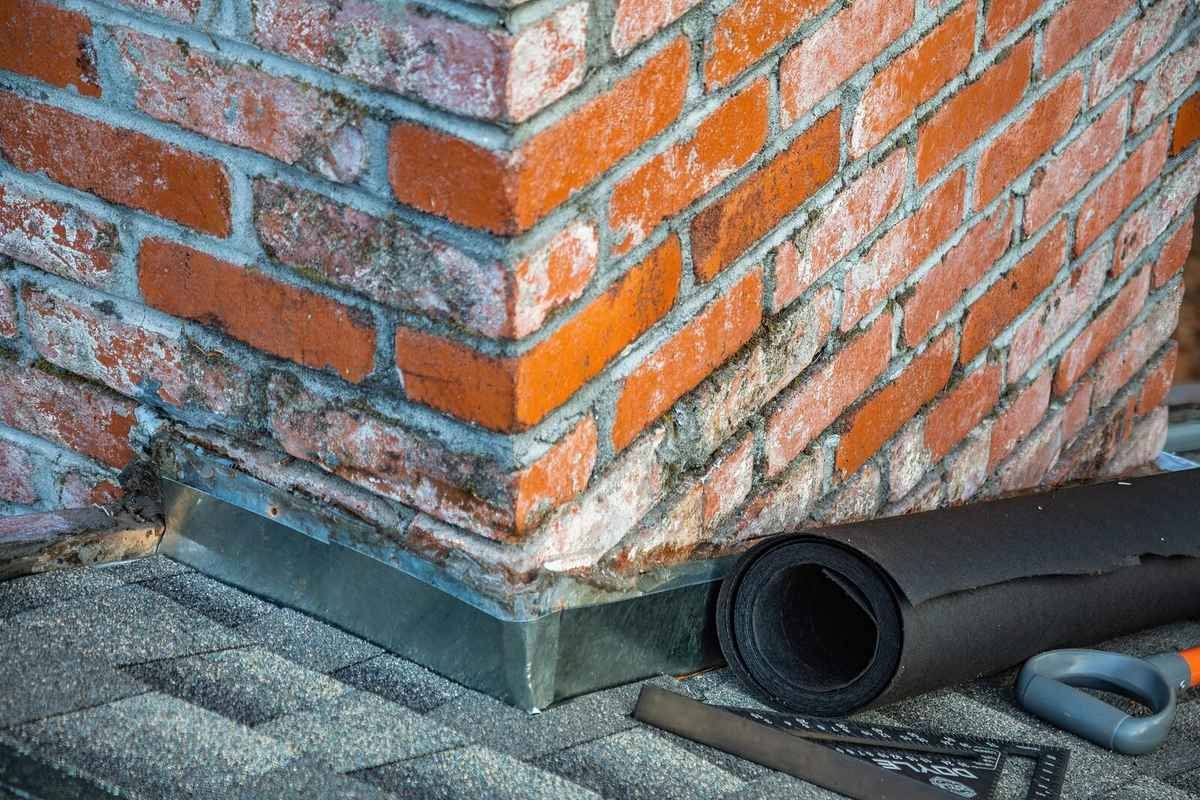
Under Michigan’s code, the primary run is along every eave, extending from the edge of the roof to a point at least 24 inches inside the exterior wall line (36 inches measured along the slope on roofs 8:12 pitch or steeper) — far enough that the membrane covers the entire zone where an ice dam typically forms and holds water. Roofing crews commonly extend the same membrane into roof valleys, around chimneys and skylights, and at any other penetration where water concentrates, since those areas share the same backed-up-water risk as the eave.
On a complex Grand Rapids-area roofline with multiple valleys and dormers — common in the Ada and Forest Hills area’s newer custom homes — the membrane footprint is often larger than the code minimum simply because there are more places for snow and ice to concentrate.
Is ice and water shield actually required by law?
Yes — and the code language itself is a useful signal for what Grand Rapids homeowners are dealing with every winter.
It’s a statewide requirement
Michigan LARA classifies every county in the state, including Kent County, as subject to the R905.1.2 ice-barrier mandate — it is not a local Grand Rapids ordinance, it is baked into the statewide residential code.
It applies to every roof type
The code lists asphalt shingles, metal roof shingles, and other common coverings — the membrane requirement travels with the roof deck, not just with one style of shingle.
It’s an admission, not a formality
A statewide ice-barrier mandate exists because ice dams are an expected regional failure mode, not a rare event — warm-climate states have no equivalent code section.
Want the full code citation and inspection detail? Read the deeper breakdown in what Michigan code requires at the eaves, or see how the membrane compares to standard underlayment in ice and water shield vs. standard underlayment.
Do older Grand Rapids-area homes already have it?
Not necessarily. The modern ice-barrier requirement only applies at the time a roof is newly installed or replaced — it is not retroactive. A home last reroofed before the requirement was enforced in its current form, or reroofed with cut corners, can be missing the membrane entirely even though the shingles above it look fine. That is why a “like-for-like” reroof on an older home is not really like-for-like: bringing the eave up to current code is often the single most important upgrade in the entire project, even though it is invisible once the shingles go down.
A licensed roofer can typically confirm eave coverage during a roof or attic inspection before assuming either way. See our roof inspection overview for what that check involves, or connect for a code-compliant roof replacement if the membrane is missing or your current roof is due.
What ice and water shield is not
- Not the same as standard felt or synthetic underlayment used across the rest of the roof field
- Not a surface coating — it goes under the shingles, directly on the deck
- Not a substitute for fixing the attic heat loss that causes ice dams in the first place
- Not something a homeowner can verify by looking at the shingles from the ground
Why West Michigan roofs need this and warm-climate roofs don’t
The code exists because of a documented, repeatable local weather pattern — not a generic cold-weather guess.
Average annual snowfall at Gerald R. Ford International Airport (NOAA climate normals, 1991–2020).
Average days per year with a standing snowpack — the raw material an ice dam needs to keep forming.
Distance the membrane must extend inside the exterior wall line under Michigan R905.1.2 (36″ along-slope on steep roofs).
Michigan LARA applies the ice-barrier requirement statewide, including all of Kent County.
Sources: City of Grand Rapids — Roof Assembly Requirements (Michigan Residential Code Ch. 9) · ICC IRC R905.1.2 · Current Results — Grand Rapids snowfall data (NOAA/NCEI).
Questions West Michigan homeowners ask
Is ice and water shield the same as underlayment?+
No. Ice and water shield is a specific self-adhering, rubberized membrane used at eaves, valleys, and penetrations, while standard underlayment (felt or synthetic) covers the rest of the roof field. Most Michigan roofs use both — the membrane where backed-up water is a risk, standard underlayment everywhere else.
Does every roof in Grand Rapids legally need it?+
Every new or replacement residential roof does, under the Michigan Residential Code (R905.1.2), which Michigan LARA applies statewide including all of Kent County. Roofs that have not been replaced since the requirement took effect may not have it.
Can I tell if my roof has ice and water shield without going in the attic?+
Not reliably from the ground, since the membrane sits under the shingles. A licensed roofer can usually confirm eave coverage during a roof or attic-side inspection, sometimes by checking permit records for the last reroof date.
Does ice and water shield stop ice dams from forming?+
No — it does not prevent an ice dam from forming, it prevents the water an ice dam traps from getting into the house. Actually reducing ice dams requires fixing the attic heat loss and ventilation that cause the melt-refreeze cycle in the first place.
Is it only installed at the eaves?+
The eave run is the code-mandated minimum, but roofers commonly extend the same membrane into valleys and around chimneys, skylights, and other penetrations, since those spots share the same backed-up-water risk as the eave.
Code-compliant roofing help across Grand Rapids & Kent County
We connect homeowners with licensed roofers throughout the Grand Rapids metro and surrounding West Michigan communities.
Related homeowner guides
Get matched with a licensed Grand Rapids roofer
Call now and we’ll connect you with a licensed West Michigan roofer who can confirm your ice-barrier coverage and quote a code-compliant fix. No phone tag, no obligation.
Call now for a roofer
Independent dispatch service connecting homeowners with licensed local roofing professionals. We are not a roofing contractor.