Winter Roof Maintenance Tips for West Michigan Homes
Winter roof maintenance in West Michigan isn’t a once-a-season chore — it’s an active watch through the exact months Grand Rapids’ snow load concentrates hardest. Grand Rapids Roofing Pros is an independent dispatch service that matches homeowners with licensed local roofers once a winter roof problem appears, but a handful of from-the-ground checks through the season catch trouble early.
Call now for a licensed local roofer
Call now and we’ll connect you by phone with the licensed local roofer you’re matched with — no phone tag, no obligation.
Ready to talk to someone about your roof?
Call to reach the licensed local roofer you’re matched with in Grand Rapids & West Michigan.
Call (901) 704-8932When you call, stay on the line for a few seconds while we match you with the licensed local roofer for your area. Have your address and a quick description of the problem ready.
We connect homeowners with independent licensed roofing professionals in the Grand Rapids area. We are not a licensed contractor and do not perform roofing work ourselves.
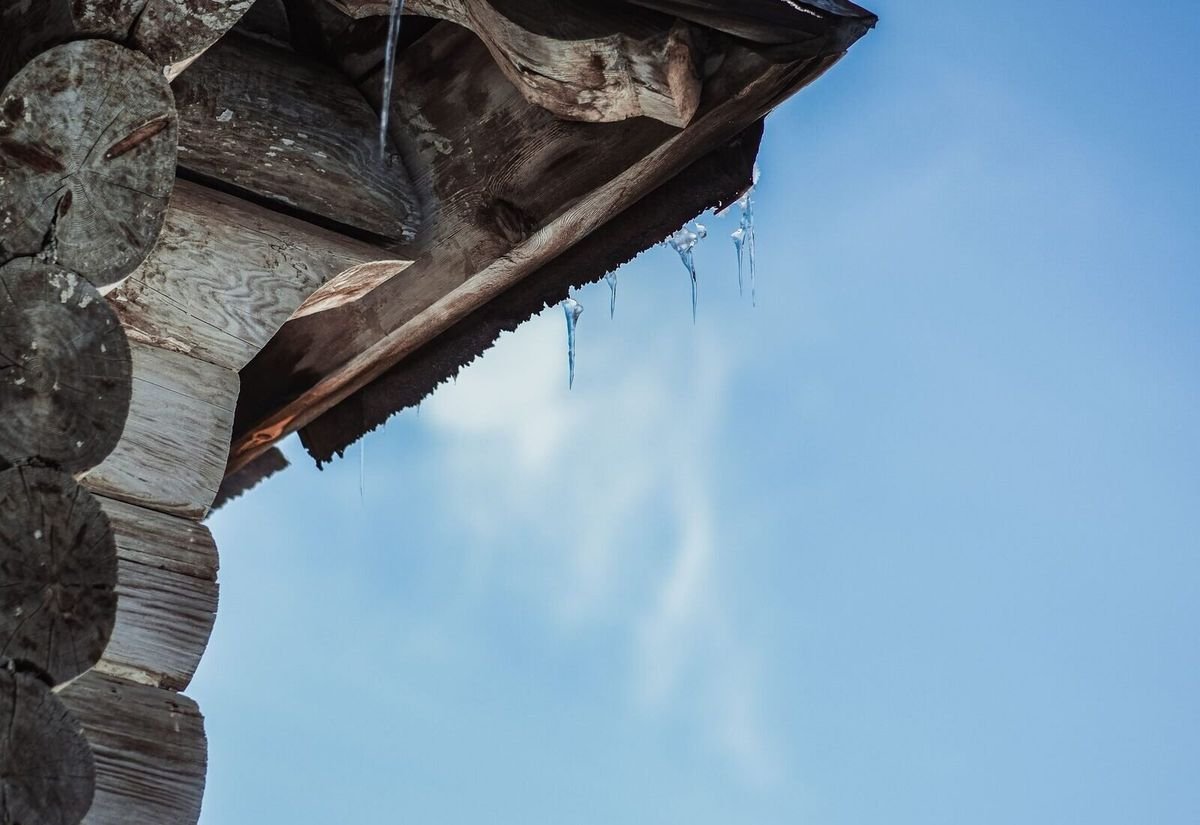
Quick answer: what winter roof maintenance actually means in West Michigan
Winter roof maintenance in Grand Rapids means watching for a growing ice ridge at the eaves, ceiling or wall staining that worsens during a thaw, and heavy accumulation that isn’t clearing from valleys or low-slope sections — all checked safely from the ground, not from a ladder on a snow- or ice-covered roof. None of it requires climbing onto the roof; all of it can be seen from a window or the yard.
What actually changes on a Grand Rapids roof once the snowpack sets in?
Once December’s snow arrives, it tends to stay. Grand Rapids averages 28.7 days a year with 5 inches or more of standing snow depth, and 8.3 days with a 10-inch-plus pack — almost all of it in January and February. That standing snow is exactly what feeds an ice dam: heat leaking from the living space into the attic melts the underside of the pack for days at a stretch, the meltwater refreezes at the cold eave overhang, and the resulting ridge forces water back up under the shingles. See the full mechanism in how ice dams form on Grand Rapids roofs.
Winter maintenance doesn’t stop that mechanism — that’s an attic-side fix, usually done in fall. What it does is catch the warning signs early, while a dam is still small and before water has made it inside.
Check safely, from the ground
- Eaves and gutters for a thickening ice ridge
- Upper-floor ceilings for new or worsening stains
- Valleys and low-slope sections for snow that isn’t clearing
- Never climb an icy roof or ladder — call a licensed roofer instead
What should I actually check through a Grand Rapids winter?
A short, safe rotation through December, January, and February — all visible without leaving the ground.
Eaves & icicles
Watch for a thickening ice ridge along the eaves after any multi-day cold stretch — the earliest visible sign of an active ice dam.
Ceilings & walls
Note any staining on upper floors, especially if it appears or worsens during a thaw and pauses once temperatures drop again.
Attic frost or dampness
If you can safely access the attic, frost or dampness on the underside of the roof deck on a cold morning is a warning sign worth acting on.
Valleys & low-slope sections
These concentrate snow and ice and are the first spots to watch for accumulation that isn’t shedding normally.
Gutters & downspouts
Ice blocking a downspout backs meltwater up toward the eave instead of letting it drain away.
After heavy snow
A roof rake used from the ground on reachable overhangs can reduce eave load — never climb onto a snow- or ice-covered roof yourself.
How long does a Grand Rapids winter actually keep snow on the roof?
These are the specific numbers that make an active winter watch necessary in West Michigan, not just a general cold-climate habit.
Average annual snowfall at Gerald R. Ford International Airport (NOAA climate normals, 1991–2020).
Falls in December (20.8″), January (22.6″) and February (17.2″) — the active watch window.
Average days per year with 5 inches or more of standing snow depth, mostly January–February.
Average days per year with a 10-inch-plus standing pack on the roof.
It’s the persistence of the pack, not any single storm, that turns a normal winter into an active ice dam risk. Sources: Current Results — Grand Rapids snowfall and snow-depth data (NOAA/NCEI Climate Normals, GRR).
Is what I’m seeing normal winter wear, or an active ice dam?
Most winter roof appearances are cosmetic. A few combinations of signs mean it’s time to call for help.
Likely normal winter wear
- Small icicles along the gutter line after a cold snap
- A thin, even snow layer across the whole roof
- Frost on attic surfaces that clears by afternoon
- No interior staining anywhere
Likely an active ice dam
- A thickening ice ridge specifically at the eaves
- Ceiling or wall stains that worsen during a thaw
- Snow that isn’t clearing from a valley or dormer
- Warm spots or persistent dampness in the attic
When does winter roof maintenance turn into a call for a licensed roofer?
Watching from the ground is the right first move — these are the points where DIY should stop.
An ice dam is already visible
Chipping at roof ice yourself risks damaging shingles and personal injury. See why in our DIY vs. professional ice dam removal comparison before attempting it.
Ceiling stains are spreading
Active interior staining during winter usually means water is already backing up under the shingles. A roof repair assessment can confirm the source.
You’re not sure what you’re seeing
A licensed roofer can tell the difference between cosmetic winter wear and an active problem. Start with a roof inspection if anything looks off.
Questions West Michigan homeowners ask about winter roof care
How often should I check my roof during a Grand Rapids winter?+
A quick from-the-ground look every few weeks is reasonable, and always after any multi-day cold stretch or a thaw. Grand Rapids holds a standing snowpack an average of 28.7 days a year, mostly in January and February, so the risk window is concentrated rather than constant.
Is it safe to remove snow from my own roof?+
A roof rake used from the ground on reachable eaves is generally low-risk. Climbing onto a snow- or ice-covered roof is not — both the fall risk and the risk of damaging shingles while chipping at ice make it a job for a licensed roofer.
What’s the first sign of a developing ice dam?+
A thickening ridge of ice specifically at the eaves, rather than icicles evenly along the whole gutter line, is usually the earliest visible sign. Paired with any new ceiling staining, it’s worth acting on.
Does more snow always mean more ice dam risk?+
Persistent standing snow cover matters more than any single storm’s total. A roof that sheds a big one-time snowfall quickly carries less risk than one holding a moderate pack for weeks, which is why Grand Rapids’ multi-week standing snowpack is the real driver.
Should winter maintenance replace a fall inspection?+
No. Winter maintenance is about watching for symptoms once snow is already down. A fall roof inspection addresses the attic-side root causes before the snowpack arrives, and the two work together rather than replacing each other.
Winter roof help across Grand Rapids & Kent County
We connect homeowners with licensed roofers throughout the Grand Rapids metro and surrounding West Michigan communities.
Continue the seasonal maintenance series
Get matched with a licensed Grand Rapids roofer
Call now and we’ll connect you with a licensed West Michigan roofer for ice dam removal or a winter roof check. No phone tag, no obligation.
Call now for a roofer
Independent dispatch service connecting homeowners with licensed local roofing professionals. We are not a roofing contractor.